
by Paul Eliefrom Georgetown University
Forgiveness Makes the Front Page
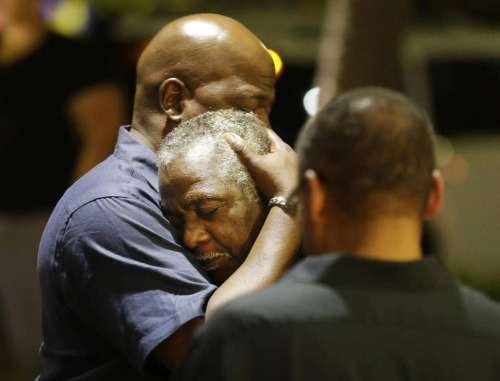
“Families of South Carolina Church Massacre Victims Offer Forgiveness.”
That, or something like it, was the headline running across the front page, above the fold, of Saturday’s New York Times. The word “forgiveness” stood out. When, I asked myself, had I last – had I ever – seen the word in a Times headline before? But there it was on the top paper in the stack at the Hudson News outlet in Penn Station.
Camping in the Catskills in the hours after the massacre took place, and then taking part in the American Pilgrimage Project in Albany, I had missed the developing story – seeing only a tabloid picturing the killer near the cash register at a diner in Demming, Sullivan County.
Already, President Obama was marveling at the forgiveness shown by the families of the victims; already David Remnick, on the New Yorker web site, was marveling at the long history of forgiveness and forbearance among African Americans. For me the story, in effect, began with forgiveness – and this made the ability of the victims’ families to forgive all the more striking.
Alas, by Monday the Times – its headline writers, at any rate – was back onto a familiar message of conflict. “Defiant Show of Unity in Church That Lost 9 to Racial Violence,” the headline read. Why “Defiant”? I read the story straight through to the end, and there is nothing in it to support the headline’s claim of defiance. Here are Christians in Charleston, black and white, joining together in faith; worshiping; singing the “sturdiest” of hymns, such as “Amazing Grace”; forming resolve against “every demon on hell and on earth”; praying together; and reaching out in prayer to the parents of the killer:
“They are shattered,” Bishop Herman R. Yoos told the congregation at a later service. “But their faith is strong.”
Why is all this presented as “Defiant”? Is it because the people at the church in Charleston are – lest we forget – black people? Or is it because forgiveness is so strange in our society that it must be infused with aggression and violence – must be made “Defiant” – lest it be unintelligible?
Remember the Name: Kalief Browder
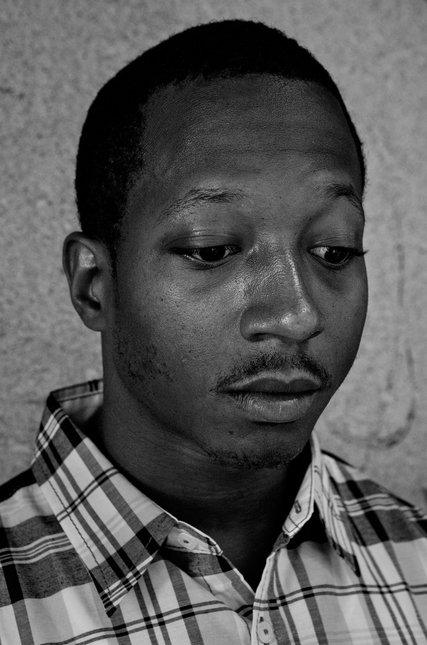
First the group email; then the personal report, the when-where-how-and-why; then the obituary-shaped article in the newspaper.
That’s how news of a suicide comes to the circle of acquaintances, and that’s how the news of Kalief Browder’s suicide came: an email from Dave, pointing to Jen’s personal report, which was followed, two days later, by an article in the Times. Kalief Browder – accused of petty theft, locked up on Rikers Island without a trial, beaten and tortured there, kept in solitary confinement for a couple of years, released abitrarily, and then profiled by Jen for the New Yorker while he tried to put his life back together – had taken his own life, and in a terrible way. The Times: “He was 22 years old.”
Many
thousands of people are in grief over Kalief Browder just now. I
know I am. What’s striking is that so many of us weren’t acquainted with Browder except through Jen’s New Yorker
pieces and the photographs that accompanied them. And yet we feel
the loss of him, and feel – beyond the horrible injustice of it,
beyond the emergence of the truth that Rikers Island and places like
it are torture sites no less than the ones the government maintains
offshore, beyond the further evidence that black lives just don’t matter all that much to people in positions of power – we feel, beyond all this, that Kalief Browder’s life was
taken for him long before Saturday night.
Myself,
I feel shame over the fact that I would not have come to know of Kalief Browder if he hadn’t been flagrantly abused at Rikers Island
and if Jennifer Gonnerman hadn’t devoted herself unstintingly to
making sure I and we knew all about him. Now – too late – he
has a face and a name.
After Browder spent more than a thousand days in jail, the majority in solitary confinement, a judge offered to release him on time served, provided he pleaded guilty to two misdemeanors. Amazingly – matter-of-factly – he maintained his innocence:
“If you want that, I will do that today,” DiMango said. “I could sentence you today. . . . It’s up to you.”
“I’m all right,” Browder said. “I did not do it. I’m all right.”
“You are all right?” DiMango said.
“Yes,” he said. “I want to go to trial.”
Back at Rikers, other prisoners were stunned. “You’re bugging,” they told him. “You’re stupid. If that was me, I would’ve said I did it and went home.” Browder knew that it was a gamble; even though he was innocent, he could lose at trial. “I used to go to my cell and lie down and think, like, Maybe I am crazy; maybe I am going too far,” he recalled. “But I just did what I thought was right.”
Why should we be amazed when a person who is innocent by all indications maintains his innocence? Has racial profiling gone this far, that we expect whole populations to take the deal and get on with it, to plea-bargain their way through life?
Now Kalief Browder, Emmett Till-like, will be made a representative figure, as in this Times editorial. It is necessarily so. But to read about him, or to see a photograph of him, is to know that he, like Till, who was murdered by white racists at age fourteen in 1955, was a person who hardly got to know himself or to live his life before the opportunity was taken from him.
Kalief, we hardly knew you. May your name be known forever.
Catching with James Parker Catching Up with Chesterton

News
it is to me that there are people proposing (as if his coarse remarks
about Jews are no big deal) that G.K. Chesterton should be declared a
saint – an actual, canonized, statue-inspiring devotion-eliciting
saint.
I’ll never be a Chestertonian, or even close, but James Parker – whose own approach is akin to G.K.’s in its blend of epigrammatic reason and outflowing passion – makes as good as case as can be made for him. (It was in the Atlantic, weeks ago now; somehow I missed it.) Here’s the best bit:
His prose, if you don’t like it, is an unnerving zigzag between flippancy and bombast—and somewhere behind that, even more unnerving, is the intimation that these might be two sides of the same thing. If you do like it, it’s supremely entertaining, the stately outlines of an older, heavier rhetoric punctually convulsed by what he once called (in reference to the Book of Job) “earthquake irony.” He fulminates wittily; he cracks jokes like thunder. His message, a steady illumination beaming and clanging through every lens and facet of his creativity, was really very straightforward: get on your knees, modern man, and praise God.
The problem with Chestertonians is that they are Chestertonian: they make the case for their man in their man’s own terms – and then (with G.K.-style overstatement) suggest that the terms are actually those of Jesus himself. Parker does that – but does it better than most:
The Chestertonian paradox, in fact, was a kind of ideogram of the foundational paradox of the Incarnation, of God being born as Man, when “the hands that had made the sun and stars were too small to reach the huge heads of the cattle,” as he wrote in another book of Christian apologetics, The Everlasting Man. And has anyone gone further than Chesterton into the agonizing paradox of the Crucifixion—Jesus’s cry of abandonment from the cross, when “God seemed for an instant to be an atheist”?
Chestertonians glory in the fact that their man was old-fashioned; but Parker’s concluding point there makes clear that in crucial ways he was ahead of his time.
Jenner, O’Connor, & “Holy Ghost”
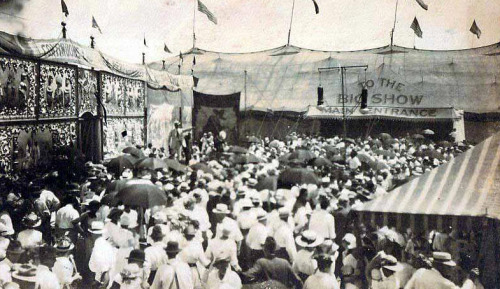
Buzz Bissinger’s story about Caitlyn Jenner (forthcoming in Vanity Fair) “reveals that Jenner has not had genital surgery.” And that puts in mind a story by Flannery O'Connor, “A Temple of the Holy Ghost”:
The tent where it was had been divided into two parts by a black curtain, one side for the men and one side for the women. The freak went from one side to the other, talking first to the men and then to the women, but everyone could hear. The stage ran all the way across the front. The girls heard the freak say to the men, “I’m going to show you this and if you laugh, God may strike you the same way.” The freak had a country voice, slow and nasal and neither high nor low, just flat. “God made me thisaway and if you laugh He may strike you the same way. This is the way He wanted me to be and I ain’t disputing His way. I’m showing you because I got to make the best of it. I expect you to act like ladies and gentlemen. I never done it to myself nor had a thing to do with it but I’m making the best of it. I don’t dispute hit.” Then there was a long silence on the other side of the tent and finally the freak left the men and came over onto the women’s side and said the same thing.
The child felt every muscle strained as if she were hearing the answer to a riddle that was more puzzling than the riddle itself. “You mean it had two heads?” she asked.
“No,” Susan said, “it was a man and a woman both. It pulled up its dress and showed us. It had on a blue dress.”
The child wanted to ask how it could be a man and a woman both without two heads but she did not… .
Was the person in the cover story “made thisaway” or has she “done it to myself”? That is the question – the riddle, if you will; and the answer (to judge from the photographs) is as puzzling, to me right now, as the riddle itself.
The Who Hits 50: “I’m One” (and So Are About 60,000 Others)
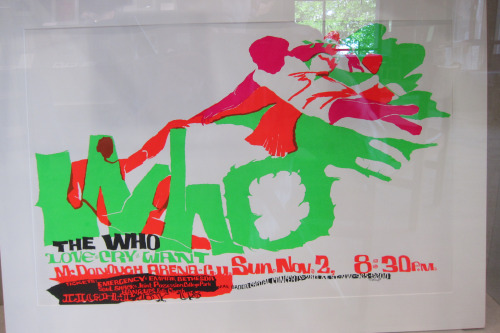
On November 2, 1969 – with Tommy riding high in the charts and the Woodstock festival fresh in the memory – the Who played McDonough Gymnasium at Georgetown for a crowd of about 4000 people.
Wednesday night – thirty-three years after their last proper album and “farewell tour” – the Who played the Barclays Center in Brooklyn for a crowd of about 20,000 people. Last week, they played for a similar crowd at the Nassau Coliseum, a few miles away on Long Island; Friday night they’ll play for another such crowd at the Forest Hills Tennis Stadium a few miles away in Queens.
And therein lies a story of the scale of popular culture then and now.
I went to the Who show at the Barclays Center – as a guest of a friend who is a friend of Pete Townshend’s – and at several points during the set Townshend explained that when the Who first toured America they were playing tiny places: the Village Theater as part of a seven-act variety show; a bar in Michigan where the crowd, said Pete, was “about twenty-five people” (“And four of them were us,” Roger Daltrey chimed in). Even after they wowed the crowd of more than a hundred thousand people at the Monterey Pop Festival in California, they played the one-thousand-capacity Fillmore East in New York; even after bringing the dawn thunder for four hundred thousand people at Woodstock, they played for four thousand people at Georgetown.
It’s the conventional wisdom that the culture of the sixties was unified, “mass” culture par excellence, and that the culture of the present is atomized and fragmented by comparison. In many ways that’s the case. But the population today is larger, and wealthier, and more consumptuous (if that’s a word) than it was in 1969, so that the Who – with no actual occasion, such as a new record or a new stage act, only a silver anniversary – can sell 60,000 tickets at top dollar in the New York area even as reasonable people wonder whether anybody even listens to the Who anymore.
Seen one way, it’s an example of the winner-take-all culture: once you’ve cracked the mass culture, your fragment of the fragmented culture will always be disproportionately large.
Seen another way, it’s an example of baby-boomer dominance at its least attractive, because one reason other bands can’t reach a mass audience is that the boomers, instead of moving on to new bands and new sounds, keep paying up to see the Who over and over again.
See a third way, it’s simply evidence that truly great performers – such as the Who – have no sell-by date. They are perennials.
I sure was glad to see them again (having grown up fully in thrall to them and having seen them in 1982 and 1994). Hearing Pete Townshend play and sing “I’m One” made me think that it may be his best song – and made me remember what a model he has been, for so many of us – the very model of a person who strives for a kind of unity among the fragments of self and society.
The image is of a screenprinted poster for the Who’s concert at Georgetown by the master printmaker Lou Stovall, on display in Lauinger Library (where it is tagged 1970, not 1969). Here’s a bootleg of the concert.
Palmyra: Destruction, or Metamorphosis?
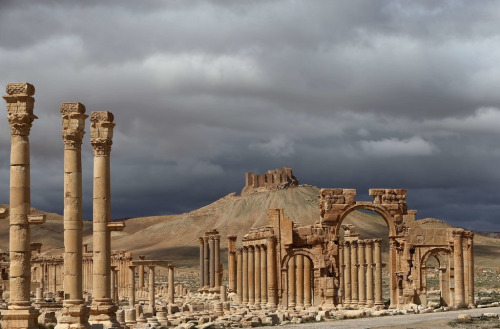
As Palmyra is subjugated by ISIS, its citizens are displaced, and the historic city is left in ruins, I happen on this passage from André Malraux’s The Voices of Silence:
Meanwhile, at a distance from Rome, an art akin to this seemed to be evolving. This was at Palmyra and in the Fayum, where the Roman forms came in contact with the Orient, as Greek forms had come in contact with Asia at the foot of the Pamirs. No doubt the Roman forms had been becoming less and less stable, and Rome did not need Byzantium to make her forget the art of Trajan. The basic elements of the Arch of Constantine and his colossal statue were already in a style directly opposed to what we call the Roman style. What was petrifying Roman figures was not yet Christianity, but the creeping paralysis of Rome herself. The Caesarian gesture was dead and the artists’ problem was not the finding of a new gesture to replace it, but one of somehow breathing life into the inert.
There may well have been other Palmyras, but, if so, they are unknown to us. The Palmyra we know was a desert port of call, but a military one; it was in this oasis that the Romans recruited the Arab cavalry they so often needed in Syria. This much-belittled art which in so many ways adumbrates Byzantine lasted nearly as long as French Romanesque. (How easy it is to imagine a history of art in which the Renaissance would be treated merely as a fleeting humanistic episode!)
Malraux in The Voices of Silence framed an aesthetic of metamorphosis, in which artistic styles are seen metamorphosing one into another across space and time. Often he expressed this through imagery of creative destruction; and often, as in the passage above – let’s imagine the Renaissance as fleeting, not central, he says – he shattered familiar art-historical narratives and put them together in new ways.
It’s striking – and appalling – to see Malraux’s metaphors re-literalized as great and enduring works of art are subjected to actual destruction at the hands of ISIS. Is the ruin of the artistic heritage of Palmyra a loss pure and simple, or is it a stage in the process of artistic metamorphosis? Malraux (to judge from The Voices of Silence) would doubtless say the latter, and a Times opinion writer says “Calm down”– but in the here and now the destruction of Palmyra looks like destruction, full stop.
Amtrak’s Secret: It Works

Amtrak regional train 188 is “my train.” I am one of the many thousands of people who take Amtrak regularly from New York to Washington and back, and I have taken the 7:10 regional train out of Washington dozens of times. On Thursday – after three eventful days at Georgetown – I returned to New York by Greyhound instead, and the experience underscored what most of us Amtrak regulars know, even if we rarely acknowledge it: that Amtrak’s Northeast Corridor system generally works very well, and that we couldn’t imagine our working lives without it.
Facing competition from Megabus, Boltbus and other low-cost carriers, Greyhound now runs new, clean buses, with more legroom, leatherish seats, and functioning wi-fi. From Washington, buses depart from Union Station, up an escalator from Amtrak’s platforms, and on a pleasant day like yesterday, waiting there, under a roof but in the open air, is more civilized than waiting for Amtrak downstairs.
And yet Greyhound is still Greyhound. Buses for New York were scheduled to depart at 8:30 and 10 a.m. As the 8:30 bus was delayed, passengers for the two buses formed a single bloblike queue. The staff seemed to know little more than the passengers, who quarreled with the staff and one another. The 8:30 bus finally pulled in more than an hour late, at 9:40 – ten minutes after the 10 o'clock bus pulled in. So passengers with tickets for the later bus (I was one) boarded and departed earlier. But the bus wasn’t on time for long. Due in New York at 3:30 – after a five-hour journey with stops in Baltimore; Mt. Laurel, N.J.; and Newark – the bus lingered in Baltimore and wound up arriving at 4:30, more than an hour late, and eight hours after I’d arrived at Union Station in the first place. And although the bus was new and clean, the ride is still an essentially captive experience, with no stop for a snack or a stretch of the legs.
By contrast, trains on Amtrak’s regional service – such as wrecked train 188 – make the trip in about three and a half hours. In my experience, trains that run in the daytime are on time 14 times out of 15; only the late-night trains seem regularly to run into long delays. The regional trains are swift and reliable enough that those of us who sometimes take the high-speed Acela (2 hours 50 minutes from New York to Washington) routinely calculate whether it’s worth paying the much higher fare for the high-speed train when the regional train will take only 35 or 40 minutes more to get there. And in some ways the regional train is preferable to the Acela, with better colors and lighting, full tables in the cafe car, and a little more room in the aisle for those of us who like to amble during the ride.
When Amtrak is safe, it works, and its speed and comfort are a privilege. It’s not cheap; and its relative efficiency likely comes at the cost of safety, too. It’s likely that those regional trains run on time – or ahead of time, to the delight of passengers – because engineers exceed the speed limit. According to a notice that popped up when I Googled “Amtrak train 188” a few minutes after Tuesday’s crash, train 188 was delayed 15 to 18 minutes out of Washington that evening due to a mechanical problem. Maybe the “mechanical problem” was on the tracks north of Philadelphia. Or maybe the engineer was speeding to make up the lost time.
I hope some other writer is looking into it. Meanwhile, I expect to ride “my train” 188 dozens of times in the years to come.
Vin Scelsa: Free Form’s Joey Ramone
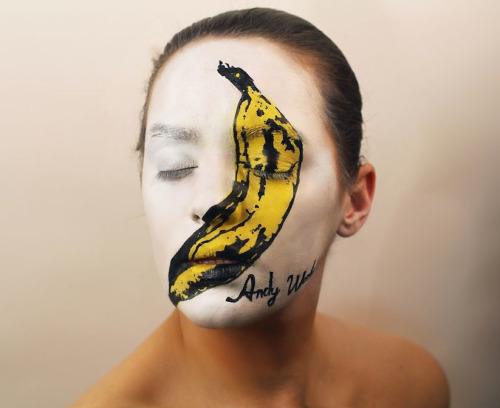
Vin Scelsa did his last radio show over the weekend. (So he says.) He began the last show (nearly) with the Velvet Underground’s “Sunday Morning,” and as is (was) so often the case for Vin, the song came with a story attached.
Before he was a disc jockey for WNEW, and satellite radio, and WFUV, where for the past twenty years or so he has made Saturday night a time for “Idiots’ Delight” –before all this, Scelsa was a student disc jockey at Upsala College, a Lutheran school in East Orange, New Jersey. As a rule the station signed off around midnight, but Scelsa and some friends of his on staff decided that it was time to liberate the station for round-the-clock programming. The Saturday of Memorial Day weekend 1968, they played records all night long – free-form – and at five a.m. Vin played the Velvets’ “Sunday Morning”: now it was Sunday morning. Because the school year had just ended, “nobody noticed our act of insurrection,” he recalled on his last broadcast. “It was the sixties, man …”
I confess that I couldn’t stand Scelsa’s show when it aired Sundays before noon on WNEW. It was too much like Sunday morning– too much like church; his free-form ruminations suggested a bad homily more than the glories of free-form radio. Then the show was moved to Saturday nights and I signed on and fell for it hard. For parts of ten years Saturday night in my apartment was a writing night – free-form, with no office work that day or the day after – and I wrote dozens of pages of each of two different books while listening to Vin Scelsa play records by Bruce Springsteen, the Ramones, the Clash, and dozens of other artists who could be heard to embody the spirit of free form.
That I am writing this at night – Sunday night – is evidence of the inspirational qualities of music after hours programmed in free form. So is the image of an artist who decorated herself with the image from the Velvet Underground’s “banana” LP sleeve to mark Record Store Day. The newyorker.com story that the image accompanied likened the Rough Trade record shop in Williamsburg, Brooklyn, to a “a physical iTunes,” and the neologism suggests how dramatically “free form” has changed – has gone into new forms – since Vin Scelsa toted his Velvet Underground and Sopwith Camel LPs (the latter he still has) to the Upsala College studios.
I’ll never forget the night Black 47 played Symphony Space and Vin joined them onstage, singing – and dancing – free-form to “Like a Rolling Stone.”
Stay free, Vin.
The Gift That Is Given Back
“On
the street, I paused a moment to commune with William Scheide’s
ghost. Scheide, who amassed one of the world’s great collections of
Bachiana, including one of two portraits of Bach that are considered
authentic, had died in Princeton earlier in the week at the age of
one hundred.”
That was last November, after a marathon performance of Bach’s organ music at St. Peter’s Church in Manhattan (which I would write about for newyorker.com). Scheide was dead, and his extraordinary run of contributions to the ongoing life of Bach’s music seemed to be over.
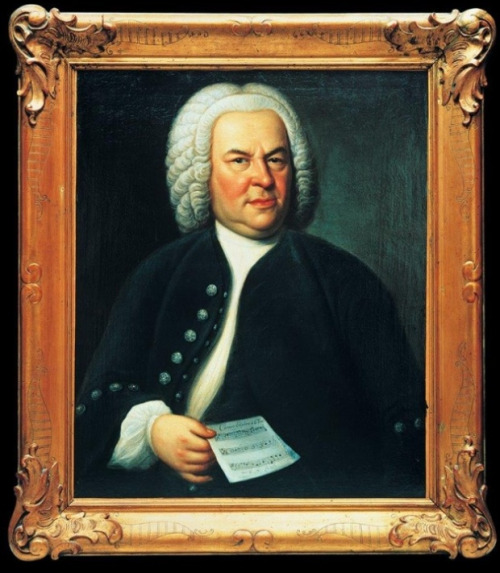
But no. From the grave – via the instrument of his will – Scheide has arranged for the portrait of Bach that he has kept in Princeton for decades to be returned to Leipzig, where Bach lived and made music in the last two decades of his life:
“Bach is Coming Home!” For once a press release gets it pretty well bang-on …
That Guardian piece (by Tom Service) and one by Zachary Woolfe in the Times tell the pretty extraordinary story of how the portrait got from Leipzig to Princeton and back again, and how it happened to make a long sojourn in the boyhood home of John Eliot Gardiner – the great interpreter of Bach’s choral music – along the way. The Guardian also unpacks the handwritten “puzzle canon” that Bach is shown holding in his right hand and explains some numerological correspondences.
What I see in the painting (and spell out in Reinventing Bach) is the way Bach took even the occasion of a portrait as an occasion to compose. The portrait was painted to mark Bach’s membership in a “correspondence” society of composers, who sent work to one another through the mail. The canon is one he had written as a condition of his membership, and through the painting the “correspondence society” comes to stand for Bach’s listeners then and now and the canon as a musical “offering” not just to them but to us:
It is turned outward to face us, as his offering to the Society of Musical Science. At the top is the title Canon Triplex a 6 voci. It is one of the canons he had written out on the back of the published text of the Aria with diverse variations. The whole thing is there on a single page, notated in the painter’s close imitation of the composer’s handwriting, so clearly that you could prop the portrait on a music stand and play the piece from it. It makes the portrait itself, already artful, a piece of music; it makes us members of the society, receiving Bach’s music through correspondence with him.
“Art is the gift that is given back,” as Lewis Hyde has it, and William Scheide has given new life to this work of art – and to Bach’s art – by returning the portrait to Leipzig, if only because it is something like the only one.
Poets, Essayists, and Novelists
For two days I’ve wondered how to think, and how to write, about the controversy over PEN’s awarding its “courage” prize to Charlie Hebdo; and then this afternoon the answer came in the mail, in the form of a big book of literary criticism: Harold Bloom’s The Daemon Knows.
Bloom’s book is subtitled Literary Greatness and the American Sublime, and to judge from the flap copy and the first few pages it has everything and nothing to do with the controversy – and with why I, although a member of PEN, a past PEN prize winner, and a judge of one of this year’s book prizes, feel, or am made to feel, something other than competent to express an opinion on the Charlie Hebdo controversy.
Why? Here’s why. PEN, as I understand it – I haven’t gone to Wikipedia or whatnot – originally stood for Poets, Editors, and Novelists. That is, it was a literary organization, not an organization devoted principally to the defense of free expression in all its forms.
Of course, it has always had an extraliterary dimension: as I recall, some great literary critic drily derided Stephen Spender for his PEN Club activities, which the critic saw as detrimental to Spender’s writing. And of course the question of what writing qualifies as “literary” writing is even harder to answer than the questions about Charlie Hebdo that various people are trying to answer.
But just now, it seems to me, the free-expression dimension of PEN is trumping the literary dimension. So while five of us judges consider the literary merits of 140 books among us and deliberate about which one deserves the Galbraith Prize, the organization’s leaders, by processes I don’t understand, decide to award one prominent prize to Charlie Hebdo, which isn’t a literary publication and was never intended to be. And then one of PEN’s members – Deborah Eisenberg, a genius of short fiction – writes a letter to dissent from the choice, and offers a slate of alternative candidates: Edward Snowden, Glenn Greenwald, Laura Poltras, and Chelsea Manning: heroes all, and most of them heroes of mine, but none of them Poets, Essayists, or Novelists, and only Greenwald a writer in the common sense of the term.
Meanwhile, I am saying to myself: alas, I don’t read French any better than I did in college; didn’t know Charlie Hebdo till the controversy; am far from expert on the situation of Muslims in France or the current forms of French secularism and anticlericalism; and have only a developing understanding of the relationship between satire, visual forms of free expression, and Muslim scruples about the depiction of the Prophet. I am a writer . . . can it be that, even in PEN, the international writers’ organization, I am “just” a writer …? In the case of Salman Rushdie’s novel The Satanic Verses, the manifest literary greatness of the book scotched all other arguments. But here? …
I’ll leave it to somebody else to weigh in on whether we the members of PEN ought to have been consulted about the recipient of the “courage” prize, the way we are asked to vote for slates of candidates for the PEN leadership every couple of years. The Academy of Motion Picture Arts and Sciences roots certain of its awards in the votes cast by members; why shouldn’t this particular literary society?
Meanwhile, PEN might take a cue from Harold Bloom. For sixty years this polymath has practiced literary criticism – sometimes in the broadest sense, sometimes more narrowly, but only rarely (I am thinking of his book on the Mormons) as anything but literary criticism, as writing about other writing.
It seems to me that PEN, while remaining firmly committed to free expression, might focus its gaze a little more tightly on literary expression – on written texts that can be read, evaluated, and judged on their merits as written texts, the way the five of us judges are reading, evaluating and judging the books for the Galbraith Prize.
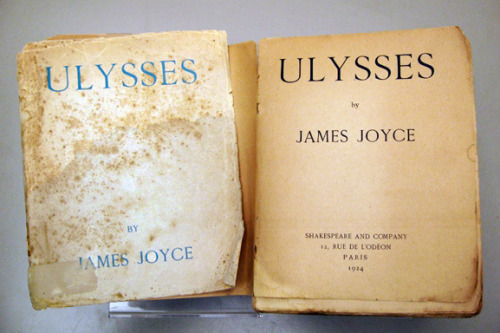
The image is of the first edition of James Joyce’s Ulysses, published in Paris in 1924 after Anglophone publishers decided it was too risky to publish.