
by Paul Eliefrom Georgetown University
Remember the Name: Kalief Browder
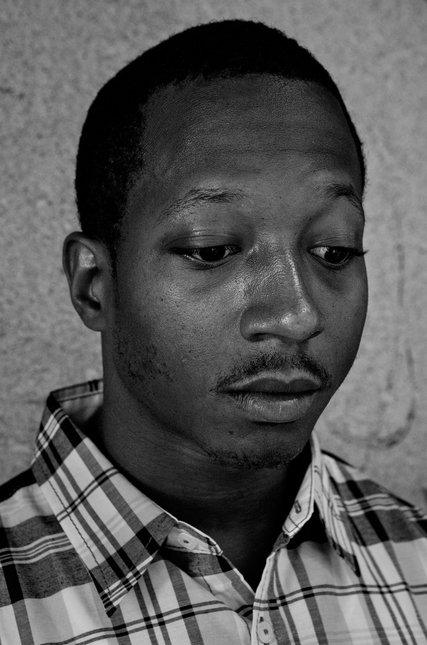
First the group email; then the personal report, the when-where-how-and-why; then the obituary-shaped article in the newspaper.
That’s how news of a suicide comes to the circle of acquaintances, and that’s how the news of Kalief Browder’s suicide came: an email from Dave, pointing to Jen’s personal report, which was followed, two days later, by an article in the Times. Kalief Browder – accused of petty theft, locked up on Rikers Island without a trial, beaten and tortured there, kept in solitary confinement for a couple of years, released abitrarily, and then profiled by Jen for the New Yorker while he tried to put his life back together – had taken his own life, and in a terrible way. The Times: “He was 22 years old.”
Many
thousands of people are in grief over Kalief Browder just now. I
know I am. What’s striking is that so many of us weren’t acquainted with Browder except through Jen’s New Yorker
pieces and the photographs that accompanied them. And yet we feel
the loss of him, and feel – beyond the horrible injustice of it,
beyond the emergence of the truth that Rikers Island and places like
it are torture sites no less than the ones the government maintains
offshore, beyond the further evidence that black lives just don’t matter all that much to people in positions of power – we feel, beyond all this, that Kalief Browder’s life was
taken for him long before Saturday night.
Myself,
I feel shame over the fact that I would not have come to know of Kalief Browder if he hadn’t been flagrantly abused at Rikers Island
and if Jennifer Gonnerman hadn’t devoted herself unstintingly to
making sure I and we knew all about him. Now – too late – he
has a face and a name.
After Browder spent more than a thousand days in jail, the majority in solitary confinement, a judge offered to release him on time served, provided he pleaded guilty to two misdemeanors. Amazingly – matter-of-factly – he maintained his innocence:
“If you want that, I will do that today,” DiMango said. “I could sentence you today. . . . It’s up to you.”
“I’m all right,” Browder said. “I did not do it. I’m all right.”
“You are all right?” DiMango said.
“Yes,” he said. “I want to go to trial.”
Back at Rikers, other prisoners were stunned. “You’re bugging,” they told him. “You’re stupid. If that was me, I would’ve said I did it and went home.” Browder knew that it was a gamble; even though he was innocent, he could lose at trial. “I used to go to my cell and lie down and think, like, Maybe I am crazy; maybe I am going too far,” he recalled. “But I just did what I thought was right.”
Why should we be amazed when a person who is innocent by all indications maintains his innocence? Has racial profiling gone this far, that we expect whole populations to take the deal and get on with it, to plea-bargain their way through life?
Now Kalief Browder, Emmett Till-like, will be made a representative figure, as in this Times editorial. It is necessarily so. But to read about him, or to see a photograph of him, is to know that he, like Till, who was murdered by white racists at age fourteen in 1955, was a person who hardly got to know himself or to live his life before the opportunity was taken from him.
Kalief, we hardly knew you. May your name be known forever.