
by Paul Eliefrom Georgetown University
Pope Francis: The Mystery of Personality
Flannery O'Connor said somewhere that the true subject of fiction is “the mystery of personality.” It seems to me that “the mystery of personality” is the true subject of literary biography, too; and so, when, in the early stages of writing a group portrait of four American Catholic writers, I was asked to write about the papacy, I instinctively turned to the mystery of personality – considering the papal office by considering the character of the man who occupied it.
Twelve
years later, I still think it’s a sound approach, and it’s the
approach I took in writing a profile of Pope Francis – “Our Man
in the Vatican” – that’s out in the October Vanity Fair.
From the headline (chosen by the editors) onward, the profile
focuses on the man now known simply as Francis, who makes his own bed and carries his own briefcase:
Somehow he has stayed true to himself and to the core Catholic message and has kept free of the pomp of the papacy, the crush of celebrity, and the expectations of the global Church. “He doesn’t `play’ the Pope,’ says Archbishop Claudio Maria Celli, head of the Pontifical Council for Social Communications. “He is who he is.”
He
is who he is: and and through the mystery of personality, who he is
is shaping – changing – the Church.
Sounds
obvious, but it’s not. For half a century – as I spelled out in
The Atlantic in 2004
– coverage of the papacy has focused on the sociology of the
Vatican; the exoticism of the place, a foreign country after all; its
monarchical trappings (those Swiss Guards); the long-running
conflicts between Italians and internationalists, conservatives and
progressives, Augustinians and Thomists, and so on; or the perpetual
gap between the medium and the message –the everyday contradictions
and hypocrisy of the place.
To focus on the Vatican in one of these ways is to be an expert, or to sound like one. But it is to miss much of the human story. As I see it, the papacy in our time is better understood through attention to the character of popes in our time. John Paul was essentially a performer, like a Shakespearean actor on a global stage. Benedict was essentially a scholar, drawn to texts and their interpretation. And Francis is essentially a conversationalist – meeting people face to face, talking and listening.
That’s
the Francis I set out to depict in the Vanity Fair
profile, which I see as a piece of long-form, present-tense
portraiture in line with dozens of long-form portraits the magazine
has published over the decades, often accompanied by portrait
photographs that are works of art in their own right.
“Our
Man in the Vatican” begins on page 268 and is up on vf.com.
Jenner, O’Connor, & “Holy Ghost”
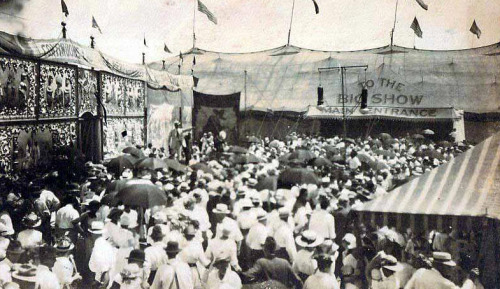
Buzz Bissinger’s story about Caitlyn Jenner (forthcoming in Vanity Fair) “reveals that Jenner has not had genital surgery.” And that puts in mind a story by Flannery O'Connor, “A Temple of the Holy Ghost”:
The tent where it was had been divided into two parts by a black curtain, one side for the men and one side for the women. The freak went from one side to the other, talking first to the men and then to the women, but everyone could hear. The stage ran all the way across the front. The girls heard the freak say to the men, “I’m going to show you this and if you laugh, God may strike you the same way.” The freak had a country voice, slow and nasal and neither high nor low, just flat. “God made me thisaway and if you laugh He may strike you the same way. This is the way He wanted me to be and I ain’t disputing His way. I’m showing you because I got to make the best of it. I expect you to act like ladies and gentlemen. I never done it to myself nor had a thing to do with it but I’m making the best of it. I don’t dispute hit.” Then there was a long silence on the other side of the tent and finally the freak left the men and came over onto the women’s side and said the same thing.
The child felt every muscle strained as if she were hearing the answer to a riddle that was more puzzling than the riddle itself. “You mean it had two heads?” she asked.
“No,” Susan said, “it was a man and a woman both. It pulled up its dress and showed us. It had on a blue dress.”
The child wanted to ask how it could be a man and a woman both without two heads but she did not… .
Was the person in the cover story “made thisaway” or has she “done it to myself”? That is the question – the riddle, if you will; and the answer (to judge from the photographs) is as puzzling, to me right now, as the riddle itself.
“Fanatics, None Greater”: ISIS via Flannery O'Connor
“They’re not religious leaders – they’re terrorists.”
That’s President Obama, the other day, in vexed reference to the people in Syria and its surroundings who call themselves ISIS – and who, in the way that language has with us, are now accorded the kind of verbal respect shown to religious leaders and heads of state.
Of course he’s right. But the problem with ISIS – the problem with the so-called War on Terror – is that the terrorists are not incidentally religious.
Ten years ago, when the theoconservatives surrounding President George W. Bush declared the war on terror a religious war, I stood firmly with the people who dismissed such talk as politically motivated evangelical hooey.
Now there is pretty obvious evidence that ISIS’s terrorist acts aren’t just directed at “the West,” but against people of Christian belief in the West. An evangelical Christian aid worker murdered. A Catholic photographer beheaded. Twenty-one Coptic Christians beheaded at the seaside. More than ninety Syrian Christians taken captive and threatened with the loss of their lives.
The people who call themselves ISIS are Islamicist fanatics who are making Christians their targets, after the fashion of a religious war.
The question, then, isn’t whether the people who call themselves ISIS are terrorists or religious people. The question is whether religious fanaticism or terrorist violence has priority for them.
Flannery O'Connor, writing to a Catholic nun she knew in 1963, explained the fierce combination of religion and violence in her work this way:
To a lot of Protestants I know, monks and nuns are fanatics, none greater. And to a lot of monks and nuns I know, my Protestant prophets are fanatics. For my part, I think the only difference between them is that if you are a Catholic and have this intensity of belief, you join the convent and are heard from no more; whereas if you are a Protestant and have it, there is no convent for you to join and you go about in the world getting into all sorts of trouble and drawing the wrath of people who don’t believe anything much at all down on your head … .
There, I think O'Connor put something just right. But does it apply to ISIS?
About ISIS, that is, the question is this: Are they religious fanatics who, finding no religious context for their fanaticism, seek it in violence? Or are they people of violence who, finding no social context for their violence – a conventional standing army, for example – seek it in religion?
That, it seems to me, is a question it falls to the religious imagination to try to answer. And if we could answer it, we would understand our age a whole lot better.
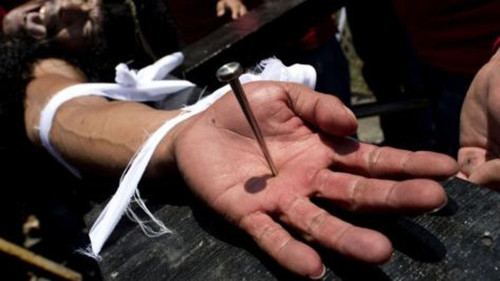
The photograph is of one of many crucifixions performed by ISIS in Syria. Most of the images are far more gruesome. I’ve never seen any of them reproduced in conventional or legacy media.
Matisse’s Cut-outs: Time Running Out
“I will get out of my head seeing that Matisse chapel in Vence,” Flannery O'Connor told her friends
Sally and Robert Fitzgerald in 1958. A pious cousin had arranged
for her to join a pilgrimage of Georgia Catholics to Rome and Lourdes
(the latter in the hope of a miracle cure for O'Connor’s lupus). O'Connor had other aspirations for the trip: “The one thing in
France I have a real desire to see is Matisse’s chapel in Vence; but
of course they won’t be going anywhere near suchlike as that …”
That’s the way I’ve felt all fall, going around New York with the knowledge that Matisse’s cut-outs are on view at the Museum of Modern Art — and with the knowledge that, likely as not, I won’t be going anywhere near suchlike as that. And that’s the way I feel just now, learning that MoMA is going to stay open round the clock through 5:30 Sunday to enable us laggards to see the cutouts – and knowing that, likely as not, I’ll not get there anyhow.
What is it that has kept me from clearing an hour in a busy season – of soccer games, basketball games, skiing, and the circus; of restaurant nights out; of movies and long-form television, of live rock-and-roll and live Bach, of pocket exhibitions about St. Francis of Assisi and Thomas Merton – what has kept me from clearing an hour to see one of the great works of art of recent times?
It’s the high cost of MoMA: admission $25, with no discounts for families or children old enough to walk and talk (the admission is being cut in half during the overnights).
It’s the museum’s still-strange hours: closed at 5:30 weekdays like a cobbler’s, closed Wednesdays, open late Friday and Saturday evenings – great for a date, not so great for a family outing.
It’s the thought that the cut-outs show is so fundamental that it would be wrong to go to it solo, without my wife or our children: better not to go at all than to leave them out.
It’s the impression I’ve got – wrong, maybe, still very strong, I’d say – that the Museum of Modern Art is a museum for adults, for French and Japanese tourists and glamorous people wearing clothes that aspire to be art, and that it isn’t a welcome place for a home-school outing or for middle-schoolers who don’t yet bend the knee to line and color and significant form.
It’s the very lightness of the cut-outs: surely I would make time for a similar exhibit of Da Vinci drawings or late Rembrandt self-portraits.
It’s the high cost of MoMA, fed through the expectation that the price of culture (unlike sports, or good cooking) should be nil or nominal.
It’s
all those things: but behind them, or beneath them, it’s the vague
recollection that all this already happened: that I rushed to see
Matisse “once and for all” once before, when the Matisse
retrospective – one of the first contemporary museum blockbusters –
was held at MoMA in 1992.
I saw
the cut-outs in that show, didn’t I? I saw them. I did. I know I
did. I am sure I did.
Strange
to think that a blockbuster show can create such an aura around the
artist and the event that we can be left doubting our own visual
memories of the actual works of art.
Why am I not rushing to the cut-outs, rushing to seize the reprieve of the final weekend? I’m not proud to say so, but it’s because I’ve seen them before.
Hoping to get to Matisse’s chapel in Vence before my time runs out.
St. Francis of Assisi, Size Small
What becomes a legend most? In the case of St. Francis of Assisi, it’s eight-hundred-year-old documents pertaining to the establishment of the Franciscan order – not.
No, what becomes the saint of simple ways is the saint in miniature.
At least, that’s what I found at a recent exhibit of Francis memorabilia in Brooklyn. I set out the how and why of it in this essay up now on newyorker.com.
Flannery O’Connor, glossing the legend in which Francis converts the wolf of Gubbio, wrote this: “I don’t know whether he actually converted this wolf or whether the wolf’s character didn’t just greatly improve after he met St. Francis. Anyway, he calmed down a good deal. But the moral of the story, for me at least, is that the wolf, in spite of his reformed character, always remained a wolf.” So it is for the saint, too. Eight hundred years on, Francis is still Francis … His simplicity is intact; the threads of his brown cloak haven’t been ravelled.
The essay itself is meant to be a miniature – and simple, too.
The image is of St. Francis incorporated into a medieval psalter in the recently concluded Brooklyn exhibit.
Prototype Festival: Opera on a Mythic Plane
The Southern Gothic is alive and well and living in the opera houses of New York – or, more precisely, in the city’s multipurpose performance spaces.
This year’s Prototype Festival of “visionary theater and opera” featured two works rooted in the Southern Gothic: The Scarlet Ibis, a chamber opera adaptation of a 1960 short story about two brothers in the early modern South, and Winter’s Child, an original oratorio about a mother who has lost three daughters and is trying desperately to hold onto a fourth.
I was invited to lead a talkback about the two productions and the Southern Gothic at St. Paul’s Chapel, and there was plenty to talk about. What is the Southern Gothic? Let’s see. It’s work set in a place physically ruined and religiously overshadowed, where mystery and manners are in abundant supply; or – as Winter’s Child composer Ellen Reid’s program notes suggested – it’s a compote of family and death and love and shouts and curses and Jesus.
Scarlet Ibis librettist David Cote disavowed any attempt to write Southern Gothic, but he had a sure answer to what effect the southern setting – North Carolina circa 1912-1918 – had on the work. “It meant that the story could unfold directly on a mythic plane instead of my having to push it there from a starting point of realism,” he said.
The chamber opera’s use of puppetry had a similar effect. Spending time with a younger brother (called “Doodle”) who has a disability in the legs, the character called Brother resolves to teach him to walk – and compares him to Frankenstein and Lazarus in a single breath. Well, seeing the puppet who is Doodle gradually rise and walk, singing all the while, really was akin to seeing the raising of Lazarus. It was that startling. Hawthorne – or Flannery O'Connor – couldn’t have done it better.
Charles D'Ambrosio: “The Conflicted Mind in Motion”
New Year’s resolution: Read Charles D'Ambrosio.
Put that way, it sounds like a chore and not an anticipated pleasure long deferred. But an anticipated pleasure long deferred (and doesn’t it sound straight out of the catechism, put that way) is what it is. Again and again people I trust (Brennan O'Donnell, Chris Richards, Fred Bahnson) have sung the song of D'Ambrosio; and over the weekend his new book of essays got an extraordinarily generous review from the current keeper of the keys to the essay, Phillip Lopate.
Lopate’s review – really a compact essay in its own right – is focused on D'Ambrosio’s effects and how he gets them:
“A good essay seemed to question itself in a way that a novel or short story did not,” he explains. “It was a forum for self-doubt, for an attempt whose outcome wasn’t assured.” Happily admitting, “I’ve depended on my ignorance quite a bit” and “rarely researched” these efforts, D’Ambrosio has tried to use his “little store of half-knowledge” to take back some of the space “we’ve ceded … to the expert.” His aim, he states, is to “capture the conflicted mind in motion.” Confessing that he “worked on each of these pieces a stupidly long time,” he claims that “the goal of those revisions was to get the thing to read like a rough draft.”
On Oregon Public Radio a few weeks ago – thanks to Fred Bahnson for sending it – D'Ambrosio explained how his insistent skepticism coexists with a “home-brewed understanding” of the Catholic faith he grew up with. The heart of it is this:
… to recognize other people as human beings. It seems so simple and it’s so difficult … I mean, the most despised, our enemies: they remain human beings. It’s a challenge. It’s not about what it provides me; it’s about what it asks of me, and it asks difficult things.
Put that way, it reads like a home-brewed understanding of Catholic art, a rough draft of the complicated ideas on the subject that some of us have been passing back and forth the past couple of years.
Flannery O'Connor liked to quote Conrad on the novelist’s duty to render “the highest possible justice to the visible universe.” Well, from this point I’ll probably quote Charles D'Ambrosio on the essayist’s duty to render the highest possible justice to the human being – by recognizing other people as human beings.
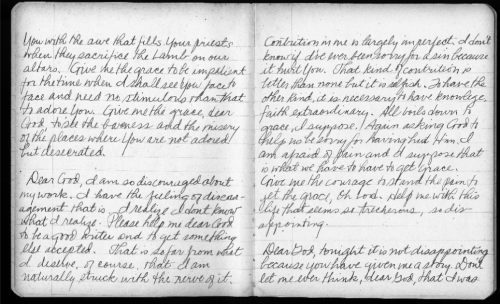
A Missing Piece of the Puzzle: Flannery O'Connor’s `Prayer Journal'
“P.S. Mr. Isaac Rosenfeld unburdened himself on the subject of Wise Blood in the New Republic. He found it completely bogus, at length.”
Flannery O'Connor got treated better in the magazine’s “back-of-the-book” review section after that review from 1952. In the years after I became a regular reader in 1984, there were strong essays about her by Brad Leithauser, Mary Jo Salter, and Christopher Benfey, among others – right up to a brilliant aside in a Diarist by Leon Wieseltier last year: this man so good at finding books or ideas bogus at length found the Prayer Journal satisfactory – and found in it this choice insight:
Can we ever settle on calling ourselves mediocre—me on myself? If I am not this or that that someone else is, may I not be something else that I am that I cannot yet see fully or describe?
Leon had already written that Diarist when he arranged for me to write a review essay about O'Connor and the Prayer Journal. I wrote it with zest. With the turmoil over the direction of the magazine, the piece never made it into print – and it was orphaned there when Leon and a couple of dozen other editors resigned a couple of weeks ago.
Now FSG has posted the whole essay on its books-and-authors website, Works in Progress. As I explain there:
In the years I spent writing The Life You Save May Be Your Own, the large collection of O’Connor materials recently placed with Emory University’s Special Collections was not accessible to writers and scholars. FSG’s publication of the Prayer Journal, then, offered an opportunity for me to add a crucial episode to my published account of O’Connor’s life—to insert a missing piece of the puzzle.
The essay, I am surprised to realize, is just a little bit shorter than the text of the journal. It has been a missing piece of the puzzle that is my own work, too. Thanks to FSG for publishing it, and to Leon for commissioning it – and for commissioning so many extraordinary review essays over the years. Who isn’t eager to know what his next move will be?
Kristeva on Teresa: Love So As to Act
I confess, I don’t have the attention span – the devotion span – to work through a six-hundred-page biography of St. Teresa of Avila by the French psychoanalyst and literary critic Julie Kristeva, not even if it is called “a kind of wisdom literature for what Ms. Kristeva likes to call the third millennium” in the Times.
That’s what Carlene Bauer, guest-reviewing for the daily Arts section, calls it. Bauer, the author of a novel rooted in the friendship between Robert Lowell and Flannery O'Connor, knows some things about wisdom literature. And she knows some things about book reviewing – such as the truth universally acknowledged that in certain cases the review, done right, can be more interesting than the book.
I suspect that this is one of one of those cases, and Bauer finds the most in Kristeva’s best bits through adroit quotation and paraphrase. Here in a stroke is the revisionist thrust of the book:
Teresa did not imprison herself in an interior castle of mysticism but reformed an order and founded 17 monasteries, traveling all over Spain. In Ms. Kristeva’s interpretation, Teresa isn’t “the patron saint of hysteria,” as Freud’s mentor Josef Breuer called her, but the patron saint of passionate pragmatics.
Here’s the answer to the presumed, and obvious, question: Why Teresa and why now?
“What’s left of that universe of faith and love, what’s left of the windmills?” Sylvia Leclercq asks. “Chimeras, TV soap operas for avid women and their partners. Or God’s madmen, the suicide bombers, who pretend not to realize that he (the Almighty, the Master, the One and Only, the True, the Beyond) has mutated into pure spectacle, and twist their alleged faith into murderous nihilism.” Teresa’s life and her writings could be one antidote to this malaise, because, according to Sylvia/Ms. Kristeva, she “ventures as far as possible along the route that beckons the person who doesn’t give up on believing, the person who talks as a way of sharing, and who loves in order to act.”
And here’s the anwer to the less obvious question: What’s love got to do with it?
Through reconsidering the life of this saint, she is calling those of us “trapped between secularism and fundamentalism” to reconsider what we think we know about love. More specifically, she asks us to rethink our Western resistance to the idealism and loss of self that love involves …
At a moment when many seem to think desire is at its most liberated when it’s at its most emotionally detached, we may need a radically simple reminder that the body can be conversant with the soul.
Carlene Bauer and I were in conversation about Flannery O'Connor’s Prayer Journal last fall. A link to our conversation is here.
The photograph is of a street mural in Preston, England, fashioned after Bernini's Ecstasy of St. Teresa.
Remember This: Jesuits and Companions, Martyred in El Salvador
Ignacio Ellacuría. Ignacio Martín-Baró. Juan-Ramón Moreno. Amando López. Segundo Montes. Joaquin López y López. Elba Ramos. Celina Ramos.
In this season of silver anniversaries – fall of Wall in Berlin; quake in San Francisco; Tom Wolfe’s “Stalking the Billion-Footed Beast” in Harper’s – maybe the most significant, and definitely the most doleful, is the twenty-fifth anniversary of the moment in history that turned those college professors and their colleagues into martyrs.
They are the Jesuit martyrs of San Salvador. Robert Ellsberg, in his great and permanent Lives of the Saints, tells the story:
On the morning of November 16, 1989, news photographers in El Salvador recorded a scene of abomination: the bodies of six Jesuit priests strewn across the garden lawn of the University of Central America. Those seeking a meaning for their deaths could look to the Latin American church’s option for the poor or to the Jesuits’ commitment to social justice. Indeed, they could look to the Sermon on the Mount. But the immediate context was the fratricidal war in El Salvador.
Rebels had challenged the military and the ruling elite, drawing on the Catholic liberation theology which called for believers, as Ellacuría put it, to “take the crucified down from the cross.” The Jesuits at once denounced unjust conditions in the country and sought a settlement to the war. The military moved on the Jesuits as rebel sympathizers:
… a unit of the Atlacatl Battalion, an elite “antiterrorist” force notorious for its record of human-rights abuses, stole onto the campus of the university … After locating Father Ignacio Ellacuría, rector of the university, along with five other Jesuits asleep in their community residence, the troops forced the priests outside, had them lie on the lawn, and then scattered their brains with machine-gun fire.
Elba Ramos was the community’s housekeeper. Celina Ramos, age sixteen, was her daughter.
What is the significance of their deaths, twenty-five years on? The word significance carries the answer. Those deaths are a sign: a sign of authentic Catholic witness, and a sign of the prospective consequences. Theoconservatives are fond of citing poll data which report that the religious communities that “demand the most” of their adherents are the ones that thrive – and are fond of playing this supposed truth against supposedly undemanding Catholic progressives. Well, the Jesuits of El Salvador wound up in a situation in which their progressive Catholicism that obviously demanded the most of them.
For their deaths to be a sign, they must be remembered, and those Jesuits have been remembered at Georgetown all through this past week: with a public forum, the presentation of a wooden cross devoted to the martyrs at the center of campus, a dramatic reading of No Mas: The Story of the Salvadoran Martyrs, and a memorial Mass celebrated by the rector of Georgetown’s Jesuit community
A new poll suggests that Catholicism is a diminished thing among Latin Americans, but no pundit is making the obvious point that one reason Catholicism is diminished in Latin America is that the people who were in charge there a quarter century ago turned their weapons on devout Catholics and killed them.
“I believe grace to be efficacious in the looooooooong run,” Flannery O'Connor told a correspondent. In the short term – look at the photograph – the military in El Salvador got its way; but the lives and the deaths of the Jesuit martyrs of San Salvador suggest that in the long run it is otherwise.