
by Paul Eliefrom Georgetown University
The Gift That Is Given Back
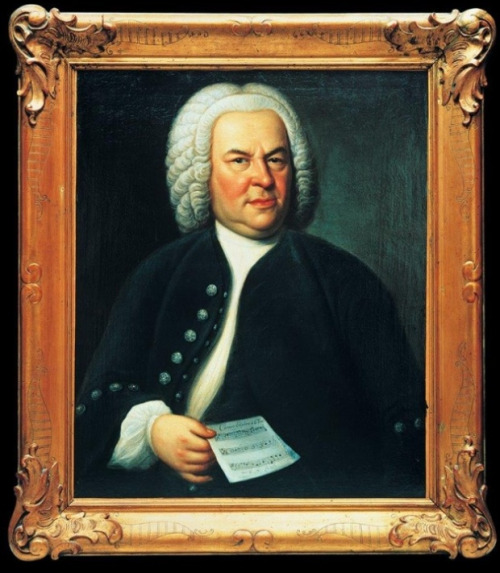
“On
the street, I paused a moment to commune with William Scheide’s
ghost. Scheide, who amassed one of the world’s great collections of
Bachiana, including one of two portraits of Bach that are considered
authentic, had died in Princeton earlier in the week at the age of
one hundred.”
That was last November, after a marathon performance of Bach’s organ music at St. Peter’s Church in Manhattan (which I would write about for newyorker.com). Scheide was dead, and his extraordinary run of contributions to the ongoing life of Bach’s music seemed to be over.
But no. From the grave – via the instrument of his will – Scheide has arranged for the portrait of Bach that he has kept in Princeton for decades to be returned to Leipzig, where Bach lived and made music in the last two decades of his life:
“Bach is Coming Home!” For once a press release gets it pretty well bang-on …
That Guardian piece (by Tom Service) and one by Zachary Woolfe in the Times tell the pretty extraordinary story of how the portrait got from Leipzig to Princeton and back again, and how it happened to make a long sojourn in the boyhood home of John Eliot Gardiner – the great interpreter of Bach’s choral music – along the way. The Guardian also unpacks the handwritten “puzzle canon” that Bach is shown holding in his right hand and explains some numerological correspondences.
What I see in the painting (and spell out in Reinventing Bach) is the way Bach took even the occasion of a portrait as an occasion to compose. The portrait was painted to mark Bach’s membership in a “correspondence” society of composers, who sent work to one another through the mail. The canon is one he had written as a condition of his membership, and through the painting the “correspondence society” comes to stand for Bach’s listeners then and now and the canon as a musical “offering” not just to them but to us:
It is turned outward to face us, as his offering to the Society of Musical Science. At the top is the title Canon Triplex a 6 voci. It is one of the canons he had written out on the back of the published text of the Aria with diverse variations. The whole thing is there on a single page, notated in the painter’s close imitation of the composer’s handwriting, so clearly that you could prop the portrait on a music stand and play the piece from it. It makes the portrait itself, already artful, a piece of music; it makes us members of the society, receiving Bach’s music through correspondence with him.
“Art is the gift that is given back,” as Lewis Hyde has it, and William Scheide has given new life to this work of art – and to Bach’s art – by returning the portrait to Leipzig, if only because it is something like the only one.
 cfcasper liked this
 etr-gu posted this