by Paul Eliefrom Georgetown University
Michael Lewis Meets Tom Wolfe: Radical Chic, Indeed
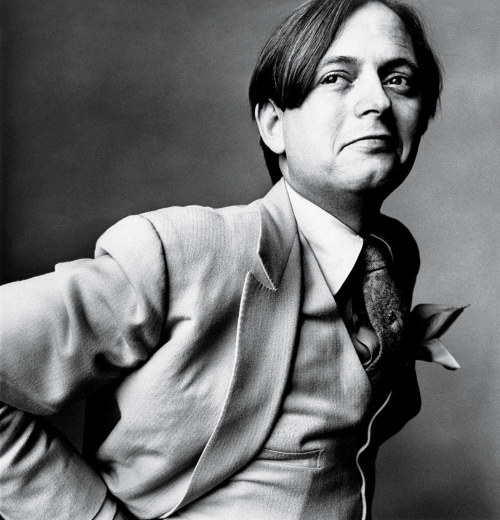
Michael Lewis has been compared to Tom Wolfe ever since Liar’s Poker was published on the heels of The Bonfire of the Vanities, and over the years he has actually managed to live up to the comparison – making himself through extraordinary effort and cunning into the nonfiction writer who is at once pathbreaking, popular, widely imitated, and effortlessly enjoyable to read.
So when Lewis pays a visit to Wolfe – as he does in a story told in the new Vanity Fair – it’s as epochal as Bob Dylan’s visit to Woody Guthrie in 1960.
He goes by private plane, hopping from Martha’s Vineyard to the Hamptons – a status detail right out of the Wolfe playbook (and there actually is a playbook: the groundbreaking anthology The New Journalism, with Wolfe’s introduction). He takes his 13-year-old daughter, a double for the boy who smuggled Radical Chic & Mau-Mauing the Flak-Catchers out of his parents’ library in Louisiana. But don’t get distracted by the set-up – the real achievement of the piece is in its reporting.
A couple of years ago the New York Public Library opened its freshly acquired cache of Wolfe’s papers to “scholars.” And in a city full of writers looking for a story, who is it but Michael Lewis – the busiest and best-paid of us all; the writer with the means to follow any story he likes, anywhere in the world – who actually takes the trouble to work through the archives and follow the path of correspondence whereby Wolfe turns himself from an ambitious but thwarted feature writer to a young grandmaster – all in the space of eighteen months.
It’s an amazing story, told in alternating blocks of Wolfe’s wildstyle prose and Lewis’s more streamlined exuberance. And it ends with a truly ace piece of reporting, which reveals – for the first time I am aware of – how Wolfe found his way into the story that became Radical Chic:
Then there’s this:
Mrs. Leonard Bernstein
requests the pleasure of your company
at 895 Park Avenue
on Wednesday January 14 at 5 o’clock
To meet and hear from the leaders of the Black Panther Party.
The invitation is right there, in one of the files stuffed with party invitations and thank-you notes and Christmas cards, without comment. Tom Wolfe is at this point the leading satirist of his age. That age appears intent on staging events for his benefit. He seems simply to stroll off Park Avenue in his white suit and into Leonard Bernstein’s party for the Black Panthers, as if he belonged.
I now admit to him that I still wonder: How the hell did he get himself invited to Leonard Bernstein’s cocktail party? He smiles and surprises me again.
He’d gone to Harper’s magazine one day in late 1969, to pay a call on Sheila, then his girlfriend. Sheila was busy, and so he went looking around the offices, to see what he could see. He came upon the office of the Pulitzer Prize-winning journalist David Halberstam. Halberstam wasn’t in it. The door was open; Wolfe walked in. On top of a great pile on Halberstam’s desk he spotted an invitation—how could he not? It came from Mrs. Leonard Bernstein. He picked it up and read it … and had an idea … How could he not … These people … they had no idea … it was as if they were determined to insult the Gods … how could they not see themselves the way others would see them … all you would have to do is tell everyone in Richmond or anyplace else outside of a certain Manhattan zip code about this and the entire country would soon be collapsing in laughter … or outrage … but … really, when you think about it … laughing or screaming: does it even matter which?…. Oh God … This really is too good…. He called the number to R.S.V.P. “This is Tom Wolfe,” he said, “and I accept.” And they just take his name down, and he’s on the guest list. He never tells Halberstam what he’s done. He simply takes out a brand-new green steno notebook with the spirals on top and writes on the cover, in his new rococo script: “Panther Night at the Leonard Bernsteins.”
If you know the book, you’ll know why that story is so important, and if you don’t, Lewis’s piece is the best introduction you could hope for.
The photographs are extraordinary, too.
Francis’s Four “Representative Americans”: Four Great Writers
Already it seems so long ago that Pope Francis, speaking to a joint session of Congress at the Capitol, organized his remarks around four “representative Americans”: Abraham Lincoln, Martin Luther King Jr. – and Dorothy Day and Thomas Merton.
Spoken – and, as far as I could tell, written – in English, the address was a rhetorical and homiletical masterstroke. Addressing a group of elected representatives, Francis put forward representatives of the striving for the common good that was his subject. Expected to speak about policies, he put the emphasis on people.
The
papal visit, my essays about the visit for vanityfair.com, and attention following on Francis’s address to Congress have kept me
away from this site – away to the point where I felt something like
homesick. Even before the event began I got emails from reporters
who knew that Day and Merton are two protagonists of The Life You
Save May Be Your Own, and the
next few hours were a flurry of compact commentary, as I tried to
characterize in few sentences people whose life stories are told in
500-plus pages in the book.
On Merton, for the Times:
He’s a man who through his writing made the search for God in a Catholic monastery seem a particularly modern and American adventure.
To the Washington Post, whose reported asked what stood out about the four figures Francis chose:
He put forward three nonviolent figures; out of the four people he mentioned, three were categorically against violence. To do that in front of Congress shows that he himself is a radical.
To
CNN, whose reporter
sought to stir up the “scandal” of Dorothy Day’s early life:
What’s made her controversial, while being considered for sainthood, is not these matters but rather her position as a pacifist and anarchist who opposed all war and called out bishops who failed to do the same… . During the Cold War, most notably, she spoke out against American militarism, “in the name of Catholicism,” while criticizing bishops who backed America’s policies.
The speech was an extraordinary moment for American Catholicism. We knew that Day and Merton were great and holy and worth putting alongside President Lincoln and Dr. King; still, it was moving, and a little vindicating, to hear our “representatives” called out by Pope Francis and characterized so aptly.
And
yet it has taken two days for me to see clearly a trait that Lincoln, King, Day, and Merton had in common. It is this: All
four of them were great writers. Holy in their different ways,
geniuses of the common good, they were also exceptional in their use
of the written word to tell the rest of us what they had seen and
heard – and what needs to be done.
That
Pope Francis is not known as a writer himself makes the choice of
these four all the more notable.
It’s a powerful reminder of how fully our encounter (to use a word Francis cherishes) with things of the spirit is bound up with our encounter with the written word.
I know it called me back to my own calling. The next morning I rose at dawn, went straight to the keyboard, and tried to “write the best words that I could write” (as Dylan put it) about Francis’s visit to Ground Zero.
The essay, with photos and video from Vanity Fair staff, is here.
Francis Spoke; the Bishops (Let’s Figure) Listened
In the moments before Pope Francis arrived at St. Matthew’s Cathedral in Washington to address the U.S. bishops, crowds massed at both ends of the block of Rhode Island Avenue where the cathedral is. Then in a flash the Pope had arrived and was inside, and the crowds scattered: the people at one end had gotten a glimpse of him; the people at the other had not.
I am staying at the Tabard Inn, and I went back to the hotel, which is in the next street over – N Street, directly behind the cathedral. As I sat eating a salad from Chop’t, it was strange to think that the Pope. right at the apogee of his renown. was in the next block, speaking to a congregation of a few hundred people – as many people as could fit onto the three luxury coaches reserved for the bishops and parked across the street from the inn.
On vanityfair.com, I spelled out the ways in which the visit to St. Matthew’s was symbolically the most consequential event of Pope Francis’s time in Washington, for it joined his Thousand Days – as I am calling them – to those of President Kennedy, whose funeral was held in the cathedral.
But it may be literally consequential as well. Unlike, say the members of Congress, the members of the U.S. episocopate are bound to listen to Francis, and in key respects to obey him. I figure they listened pretty closely.
Francis’s First Day: A Letdown
Monday afternoon the press center
looked like the Superdome just before the onset of Hurricane Katrina.
Tuesday morning it looked like the proverbial clown convention –
several hundred members of the Homeland Security Administration in
bright blue shirts, all signing in and gaining clearance to be bused
to Joint Base Andrews for Pope Francis’s arrival in the United States
– “on American soil,” as the more hyperbole-prone commentators
put it.
I am covering the visit for Vanity Fair via its website, following on my profile of Pope Francis in the current (October) issue of the magazine. My first piece, up as the Pope arrived, proposes that Francis’s personal authenticity is what makes his visit significant – because “he comes at a time when American public life is notably lacking in authenticity.” With an eye on the packed schedule and the tight security, the piece goes on:
How, in such a setting, could anybody let his authentic self show? If anybody can, it is Francis—but I think it’s fair to say that unless he can find a way to break through the cordons and act spontaneously, the visit will be a letdown.
By that standard, Francis’s arrival at Joint Base Andrews was a letdown. The Pope arrived. He said some things to the President and some other people that weren’t transmitted by any of the several thousand microphones present. He rode in the back of a black Fiat to the nunciature, got out, and went inside – without stopping to greet the schoolchildren assembled to welcome him, as far as I could tell.
The best thing was the Fiat: small, stylish, storied (“Fix It Again, Tony”), still anomalous in the United States, and – not least – a car unlike all the others in the motorcade, which made it an obvious target for a would-be assassin, and so showed Francis’s indifference to the massive security operation enacted on his behalf.
“Fix it again, Francis.” My coverage continues today on vanityfair.com.
Pope Francis and Dorothy Day: Love in Action
Not
long after I spent a midday with him at the offices of La Civiltà
Cattolica in Rome, Pope Francis’s confidant Antonio Spadaro made
a return visit, speaking at the Sheen Center in on the lower East
Side of Manhattan – a k a the East Village. His remarks that day
– about Pope Francis and social media – show up in my profile of
Francis for Vanity Fair:
Spadaro, also a contributor to Wired in Italy, savors the paradox that this gadget-averse Pope has become a social-media phenomenon. “He doesn’t have a tablet. He doesn’t use a mobile—he refused to carry one when he was in Buenos Aires. But he instinctively grasps that if the Church is going to meet people where they are—and one of the places where people are in our time is in the digital space—then you have to go there.”
Today the Sheen Center hosts a different Pope Francis event. With the Holy Father due to visit New York next week, somebody had the inspired idea of connecting the dots between Francis and Dorothy Day in a public conversation at the Sheen Center. So that’s what we’ll do, beginning at 1 p.m. – and our remarks will bracket a screening of Don’t Call Me a Saint, Claudia Larson’s documentary about the Catholic Worker foundress.
The first thing to say about Dorothy Day and Pope Francis together is that they understand poverty. “I condemn poverty, and I advocate it,” she said; he chose the name Francis to affirm that the Catholic Church is a church of the poor first of all and that to be Catholic is to understand our own poverty and make the most of it.
Carmen Trotta, long of St. Joseph’s House, which is nearby, will be there, as will Dorothy Day’s granddaughter Martha Hennessy. Maryhouse – where Dorothy Day died in 1980 – is also nearby. I still hold out the hope that Pope Francis will get there during his visit next week; there’s no better place in the city for him to witness what she (after Dostoevsky) liked to call “love in action.”
Biden and Colbert’s Late-Night Pilgrimage
I met with StoryCorps founder Dave Isay
about the American Pilgrimage Project at StoryCorps’ Brooklyn offices
yesterday, and the conversation turned to Stephen Colbert and his new
show – specifically, to his conversation (interview is not the
right word) with Vice President Joe Biden.
Dave said the conversation felt like a
StoryCorps conversation about faith.
I confess, that wasn’t my first
thought when I watched the interview. My first thought was one along
the line I took in my Vanity Fair
profile of Pope Francis – that here were two more people who
somehow have managed to remained authentic and personal and true to
themselves despite global responsibility and the glare of fame.
But Dave’s point is exactly right – and not just because Colbert is a a friend of StoryCorps and emceed the outfit’s tenth-anniversary gala. The Colbert-Biden conversation had the qualities we’re striving for with the American Pilgrimage Project – a partnership between StoryCorps and Georgetown devoted to ordinary Americans’ accounts of the role of their religious beliefs at crucial moments in their lives.
Here were two more-ordinary-than-we-thought people sharing accounts of the role their of religious beliefs at crucial moments in their lives: Biden when his son died of cancer earlier this year, Colbert when his father and two of his brothers were killed in a plane crash during his boyhood. They didn’t get all pious, nor did they get all pedantic-explanatory, explaining what they believe and why they believe it.
They simply spoke from experience about the reality of the suffering they’ve faced and the ways the Catholicism with which they were raised has helped them get through one way or another.
It was great television, and great conversation. It will be in mind as we begin a new round of the American Pilgrimage Project, following on sessions in Oklahoma, Minnesota, and upstate New York this past spring.
Francis in Philly: It’s So Crowded, Nobody’s Going
Fr. James Martin is generally so enthusiastic, so upbeat, so ready to see the bright side, that when he sees a problem, even a small problem, I take note even more than I usually do of his work.
And Fr. Martin, known as a Jesuit, is first of all a Philadelphian.
So when Fr. Martin returned from
Philadelphia the other day with word that hotels in the city
still have rooms for Pope Francis’s visit, and that people are so
fearful of the vast crowds that, in the spirit of Yogi Berra – who
said “The place is so crowded these days, nobody goes there” –
they are staying home, I figured there must be something to it.
Is there? We’ll know in ten days. Or we won’t, because the people organizing the Congress of Families and the papal Mass on the Ben Franklin Parkway will catch Fr. Martin’s drift – surely they read his Facebook page, which is read by tens of thousands – and distribute some more tickets to boost the crowd.
But I think, on some level, there is
something to it – something I tried to spell out in my profile of
Francis for Vanity Fair. It is this: Francis is not a man whose most authentic self is the self that is seen by huge crowds.
John Paul thrived on crowds. Benedict was indifferent to them, even leery of them. Francis (as we have seen) is perfectly capable in crowds – but he seems most himself when meeting people in twos and threes. So it is that, in his pontificate, the weekly audiences and Angelus in Rome have become places for close encounters with him:
Francis comes to the window and waves, and we see him. Sure, we’re seeing the Pope, on high, an icon in extremest white. But in the mind’s eye we also see the ordinary pastor who embraced a man with boils in St. Peter’s Square; who put on a clown nose without worrying that it might diminish the dignity of the papal office. In spirit, Francis isn’t up there in the palace. He is down in the square with everybody else.
Surely some lucky people will have close encounters with Francis in Washington and New York and Philadelphia. As for those who stay away, I suspect that this is one reason why: they don’t want the feeling of closeness to Francis – which is profound just now – to be amortized over a crowd.
The photograph shows Philadelphians gathered for a Mass celebrated by Pope John Paul II on the Ben Franklin Parkway in 1979. Fr. Martin calls the event “one of my most vivid memories of adolescence.”
Pope Francis: The Mystery of Personality
Flannery O'Connor said somewhere that the true subject of fiction is “the mystery of personality.” It seems to me that “the mystery of personality” is the true subject of literary biography, too; and so, when, in the early stages of writing a group portrait of four American Catholic writers, I was asked to write about the papacy, I instinctively turned to the mystery of personality – considering the papal office by considering the character of the man who occupied it.
Twelve
years later, I still think it’s a sound approach, and it’s the
approach I took in writing a profile of Pope Francis – “Our Man
in the Vatican” – that’s out in the October Vanity Fair.
From the headline (chosen by the editors) onward, the profile
focuses on the man now known simply as Francis, who makes his own bed and carries his own briefcase:
Somehow he has stayed true to himself and to the core Catholic message and has kept free of the pomp of the papacy, the crush of celebrity, and the expectations of the global Church. “He doesn’t `play’ the Pope,’ says Archbishop Claudio Maria Celli, head of the Pontifical Council for Social Communications. “He is who he is.”
He
is who he is: and and through the mystery of personality, who he is
is shaping – changing – the Church.
Sounds
obvious, but it’s not. For half a century – as I spelled out in
The Atlantic in 2004
– coverage of the papacy has focused on the sociology of the
Vatican; the exoticism of the place, a foreign country after all; its
monarchical trappings (those Swiss Guards); the long-running
conflicts between Italians and internationalists, conservatives and
progressives, Augustinians and Thomists, and so on; or the perpetual
gap between the medium and the message –the everyday contradictions
and hypocrisy of the place.
To focus on the Vatican in one of these ways is to be an expert, or to sound like one. But it is to miss much of the human story. As I see it, the papacy in our time is better understood through attention to the character of popes in our time. John Paul was essentially a performer, like a Shakespearean actor on a global stage. Benedict was essentially a scholar, drawn to texts and their interpretation. And Francis is essentially a conversationalist – meeting people face to face, talking and listening.
That’s
the Francis I set out to depict in the Vanity Fair
profile, which I see as a piece of long-form, present-tense
portraiture in line with dozens of long-form portraits the magazine
has published over the decades, often accompanied by portrait
photographs that are works of art in their own right.
“Our
Man in the Vatican” begins on page 268 and is up on vf.com.
Oliver Sacks, At Rest
“With each ending to a pop-culture phenomenon comes an unbearably long good -bye.” So ran Vanity Fair’s leader to a column by James Wolcott, who proposed that “with the waning of traditional religion … entertainment culture has become the ritual space for saying farewell to loved ones” – to the likes of David Letterman and Jon Stewart, that is.
About celebrity farewells, Wolcott is right to say “enough already.” But meanwhile a funny thing has happened in public life more broadly, as a convergence of palliative care and quick and efficient media has produced a more appealing outcome: public figures on the verge of death have been able to say something like a last word themselves.
It began, it seems to me, with Cardinal Joseph Bernadin’s simple explanation to the people of Chicago that his cancer was irreversible and he had only a few weeks to live. It was made programmatic with the New York Times’s practice of inviting people late in life to record valedictory videos to run alongside their obituaries. And it was fully on view in recent weeks in a robust and profound final essay by Oliver Sacks about the keeping of the Sabbath.
The essay, in the Times’s Sunday Review, seemed, at first, a straightforward top-shelf recollection, perhaps a late excerpt from Sacks’ recent memoir, about the place of Jewish ritual in his life: early observance, adolescent rebellion, adult falling-away, and midlife appreciation of the uncle who kept the Sabbath joyfully and fruitfully. Then – near the end – the essay plunged into profundity, as Sacks coolly remarked that he was near death and linked the Sabbath and a life’s imminent end in a way that seemed obvious and yet struck with the force of fresh insight:
And now, weak, short of breath, my once-firm muscles melted away by cancer, I find my thoughts, increasingly, not on the supernatural or spiritual, but on what is meant by living a good and worthwhile life — achieving a sense of peace within oneself. I find my thoughts drifting to the Sabbath, the day of rest, the seventh day of the week, and perhaps the seventh day of one’s life as well, when one can feel that one’s work is done, and one may, in good conscience, rest.
Now Dr. Sacks is dead, and his obituary, done artfully and unstintingly by Gregory Cowles, is in the paper. It ends with the passage quoted above, as Sacks on some level must have figured it would – a doctor, yes, a lover of life and of music, but finally an artist, shaping his material to the very end.