
by Paul Eliefrom Georgetown University
From Time, Some Inspired Q&A
The past couple of weeks have been really remarkably rich for the discussion of literature and religious belief and the ways they fit together.
The interview with Richard Rodriguez on parisreview.org; the running conversation on Twitter about J.F. Powers; the suggestion on Dappled Things that Catholic writers should sing, not shout or whisper; the plunge into the spiritual dimension of Hanya Yanagihara’s A Little Life on newyorker.com – I plan to take up all these, and some others, in the coming days, beginning with Gregory Cowles’ nimble TBR review-essay about Mary Karr’s The Art of Memoir and the Catholic connection to memoir in general.
But first: A new anthology with work by many of the writers tilling these fields is just out – What Would Jesus Ask?, compiled by Time religion correspondent Elizabeth Dias, who asked a question of Pope Francis on the plane from Philadelphia to Rome last month (after John Allen introduced them, apparently).
It’s an inspired conceit: make a list of the questions Jesus asks in the Gospels, and invite a variety of people to answer them – including three cardinals, two archbishops, an ecumenical patriarch, Mark Burnett, Amy Grant, and Marilynne Robinson. (The last shall be first.)
The question I got – “John’s baptism: was it from heaven, or of human origin?” turned out to be as apt as it was surprising:
You know, I’ve never thought about it – not that I recall, anyhow… .
Most of us know that there’s all sorts of stuff in the Gospels that has escaped our notice. And then we come upon a passage like this one, and we feel we’re coming upon it for the first time.
As I say, the book is just out. A selection of the essays is going up, too.
C.K. Williams: Poet of the Experience of Being Alive
For reasons that are the makings of another story, I’ve been listening to Jackson Browne’s song “Of Missing Persons” over and over – and as I listen, the missing person is C.K. Williams, the great American poet, who died last week at the age of seventy-eight.
While with FSG I worked with C.K. Williams – Charlie – on half a dozen of his books, from his Selected Poems to Repair and The Singing and his Collected Poems and his memoir of his father. Through the poetry I got to know the man, and through the man I got to know the poetry – an interpenetration of text and life that Charlie made seem natural and necessary but never confessional or wholly self-absorbed.
Born
in 1936, he looked young for as long as I knew him: tall, slender,
thick of hair, in jeans and casual shoes. And yet, born in 1936, he
was as aware of death, as determined to be on the lookout for death,
as anyone I’ve known.
For
all that I admire in his poetry, I can’t quite get with the
obituaries that celebrate him for his long line – they make him
sound like a trick-shot artist, a knuckleballer, rather than a poet
of great variety and resourcefulness.
Strangely,
sitting here, without a book of his open, I don’t remember poems of
his so much as moments from the poems – the crosshatched jealousies
of lovers in “Some of the Forms of Jealousy”; a guitar string
suddenly popping after (as the poem dramatizes it) tightening ever so
slowly for years and years; and especially the moment when he walked
in on his wife and their son going through a French lesson while Bach
was on the stereo – a moment which figures into my book about the ways the music of Bach figures into our lives.
It’s moments like those that Charlie developed the long line to bring into poetry. For all the art of it, it’s poetry of experience – not “poetry of consciousness,” as Charlie and some of his admirers framed it occasionally, but poetry of the experience of being alive.
Which is what makes Charlie’s death all the greater a loss, and the presence of him, through the poetry, as a missing person among us all the stronger and more haunting.
Paul
Muldoon, who taught with Charlie at Princeton, wrote an elegy for him – it’s in The New Yorker.
And The Paris Review
posted “From My Window,” a phenomenal C.K. Williams poem from 1981.
Alice McDermott’s Latest: “One of Us”?
One day during the run-up to the publication of Alice McDermott’s novel Charming Billy a photographer and a couple of well-turned out assistants set out from Manhattan for Robert Moses State Park, there to shoot some images for the book jacket at the tip of Long Island where key scenes in the novel are set – the furthest point in her characters’ outward migration from Brooklyn.
Those images (I was working for FSG, the book’s publisher) didn’t make the jacket, but they were on mind when I read Alice’s story “These Short, Dark Days,” published in The New Yorker a few weeks back – because it was Labor Day when I read it, and I went to the beaches there with family and friends.
At once part of
greater New York and topographically distant from it, that Long
Island beach was an ideal vantage point from which to consider the
story, because the combination of close proximity and great distance
is the key to Alice’s work and its effects.
The situation in
the story is this: A man, fired for lateness from his job as a subway
trainman, takes his own life, leaving behind his young wife, who is
carrying their child. An elderly Little Sister of the Sick Poor
intervenes to comfort the wife and arrange a swift burial for the
husband: swift so that he can be interred in the couple’s plot in
Calvary, which was paid for along with their wedding, before church
or cemetery officials can grasp that he died a suicide – which
would bar him from burial in a Catholic cemetery. The story
proceeds from there, vivid and full of feeling as is all Alice’s work, but
with extremes of compression and clarity that push it right to the
border (as difficult to discern as the one between Brooklyn and Long
Island) between realistic fiction and allegory.
Like so much of Alice’s work, the story is set in Brooklyn circa 1960 – what might be called Catholic Brooklyn – and it’s the setting that gives the story its combination of proximity and distance. “One of us,” the nun – whose name in religious life is Sister St. Savior – observes at several points, recognizing the other characters as Catholics like herself; and much of the power of the story, for this Catholic reader any any rate, proceeds from the fact that we too are “one of us,” and speak a certain traditional language of mercy and penitence , and are implicated in an undertaking that is ongoing.
But the drama in
the story derives from conditions in place in 1955 that, as far as I
know, no longer obtain in the United States. The absolute ban on
Catholic burials for people who die by their own hand; the nun –
named Sister St. Savior! – whose only acknowledged sins are having
too much contempt for politicians and re-allocating the alms given to
the Little Sisters for her own charitable purposes now and again; the
trainmen who abruptly leave the reception after the funeral when they
lean there is no drink to be had – these are absolutes which can be accepted as realistic because the story is set in 1960.
The movement in
the story involves Sister St. Savior’s refusal to accept those
absolutes, if only to assert her own flexible will against the
inflexible wills of the men who run the church. The effect – not
to give away the story – is that we see Sister St. Savior as “one
of us,” a person who finds a flexible and merciful solution, in
opposition to the rigid clergy, an overly strict sister in religious
life, and a cynical young man who calls in the story to the “all
the news that’s fit to print” New York Times.
On its own terms,
it works, but so powerfully does it work on me – and this is always
the case with Alice’s fiction – that it raises questions that are
outside the terms of the story: questions those of us answer who live
in the world of softened and collapsed absolutes that is the world of 2015.
If we are being
flexible, why does it really matter where the man is buried? He was
a Catholic; presumably it mattered to him. It mattered to his wife
because it was paid for, besides. It matters to Sister St. Savior
because she has the ability to make it happen. It matters because,
in 1960, religious organizations had something like a monopoly on burial sites in New
York City. But does it really matter in the end – is that cemetery hallowed ground in any sense?
And how about the
church’s old, hard line against suicide? It was harsh, yes, but
wasn’t it harsh because the effects of suicide are themselves so
awfully harsh? Wasn’t it meant, among other things, as a bulwark
against the inward turn of depression, and against the impulse to
take “one’s own” life when – as was the case in those age – a
man was the head of household and there was a wife and an expected
child to consider?
And how about
Sister St. Savior’s way of solving the problem? Her quiet way
of administering mercy while leaving the letter of the law unchanged
– isn’t that why it was so hard for the letter of the law to be
changed? Might it have been better for her to have challenged those clerics and cemetery officials by calling a suicide a suicide and calling for mercy for the man anyhow, so that the next man in his situation might have been able to receive the ministrations of
others before it was too late?
Those are my
questions, which arise because Alice’s Catholic world is at once so close and so
distant – because, for all that has changed, I feel included in the
circle of the people in the story as “one of us.”
Our Invisible Poor – All Over Again
President Obama’s role in a panel
discussion on poverty at Georgetown has gotten across-the-board
coverage: the Times, the
Post, NPR, CNN,
Politico, the National
Catholic Reporter, Rush
Limbaugh …
From a seat in the balcony of Gaston Hall I took notes on the event, and I wrote them up overnight for The New Yorker, which posted my piece on its website a few hours ago:
In our anti-monarchy, it was a sight beautiful to behold—the leader of the free world ambling onstage and settling into a chair just like the chairs occupied by his fellow-interlocutors, Robert Putnam, of Harvard, Arthur Brooks, of the American Enterprise Institute, and E. J. Dionne, of the Washington Post, and speaking about poverty and listening to the others while the bells of the university chapel chimed noonday in the background.
A little further into the piece I draw a dotted line between President Obama’s engagement with Robert Putnam’s new book on poverty and inequality and President Kennedy’s engagement with Michael Harrington’s book The Other America, which he read about in The New Yorker:
Now Michael Harrington, an alumnus of the Catholic Worker and the Fund for the Republic who is at present a contributing editor of Dissent and the chief editor of the Socialist Party biweekly, New America, has written “The Other America: Poverty in the United States” (Macmillan). In the admirably short space of under two hundred pages, he outlines the problem, describes in imaginative detail what it means to be poor in this country today, summarizes the findings of recent studies by economists and sociologists, and analyzes the reasons for the persistence of mass poverty in the midst of general prosperity. It is an excellent book—and a most important one.
It’s neat to see Macdonald’s long and consequential piece – “Our Invisible Poor” – billboarded alongside my short one on the magazine’s website.
The Gift That Is Given Back
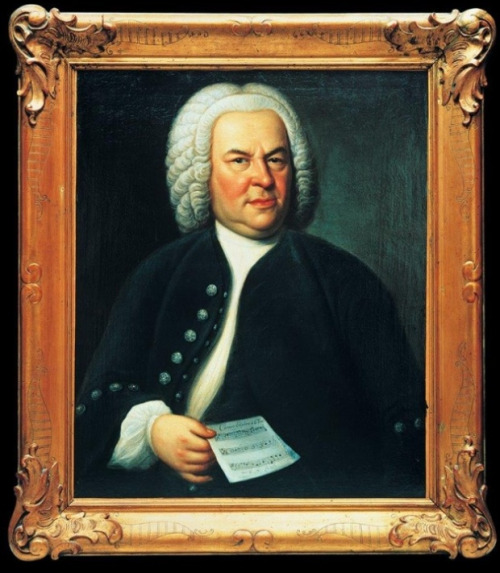
“On
the street, I paused a moment to commune with William Scheide’s
ghost. Scheide, who amassed one of the world’s great collections of
Bachiana, including one of two portraits of Bach that are considered
authentic, had died in Princeton earlier in the week at the age of
one hundred.”
That was last November, after a marathon performance of Bach’s organ music at St. Peter’s Church in Manhattan (which I would write about for newyorker.com). Scheide was dead, and his extraordinary run of contributions to the ongoing life of Bach’s music seemed to be over.
But no. From the grave – via the instrument of his will – Scheide has arranged for the portrait of Bach that he has kept in Princeton for decades to be returned to Leipzig, where Bach lived and made music in the last two decades of his life:
“Bach is Coming Home!” For once a press release gets it pretty well bang-on …
That Guardian piece (by Tom Service) and one by Zachary Woolfe in the Times tell the pretty extraordinary story of how the portrait got from Leipzig to Princeton and back again, and how it happened to make a long sojourn in the boyhood home of John Eliot Gardiner – the great interpreter of Bach’s choral music – along the way. The Guardian also unpacks the handwritten “puzzle canon” that Bach is shown holding in his right hand and explains some numerological correspondences.
What I see in the painting (and spell out in Reinventing Bach) is the way Bach took even the occasion of a portrait as an occasion to compose. The portrait was painted to mark Bach’s membership in a “correspondence” society of composers, who sent work to one another through the mail. The canon is one he had written as a condition of his membership, and through the painting the “correspondence society” comes to stand for Bach’s listeners then and now and the canon as a musical “offering” not just to them but to us:
It is turned outward to face us, as his offering to the Society of Musical Science. At the top is the title Canon Triplex a 6 voci. It is one of the canons he had written out on the back of the published text of the Aria with diverse variations. The whole thing is there on a single page, notated in the painter’s close imitation of the composer’s handwriting, so clearly that you could prop the portrait on a music stand and play the piece from it. It makes the portrait itself, already artful, a piece of music; it makes us members of the society, receiving Bach’s music through correspondence with him.
“Art is the gift that is given back,” as Lewis Hyde has it, and William Scheide has given new life to this work of art – and to Bach’s art – by returning the portrait to Leipzig, if only because it is something like the only one.
Down in the Corner
One of the truly great pieces of sports writing I’ve read is “Mad Cathedral,” by my friend Thomas Kelly, an essay published in Esquire in 1998. It’s a love song to the old Yankee Stadium, and a fight song raised up when the Yankees were threatening to build a new stadium on the West Side of Manhattan or in New Jersey. Tom’s argument is that the old Stadium is so full of ghosts – of players past, of family members lost – that it can’t be rebuilt or replaced, and it’s heartbreakingly persuasive.
So I feel a little guilty, and a little shallow, going to the new Yankee Stadium and simply enjoying myself – feeling that the new Stadium is “close enough to the old one, in location and design, that all the old memories are still there.” And that’s one reason why going to NYCFC matches at the Stadium is so enjoyable. All the old memories are still there – but they’re not burdened with comparisons to the old Yankee Stadium, or the old Yankee Stadium before the 1976 renovation, and so on.
An essay of mine about going to see NYCFC – that’s New York City Football Club – is up on the New Yorker web site. (It’s my fifth piece there, I’m happy to say.) I think of it as a pendant to Tom’s great essay, a shout-out to the Ghosts of Stadium Present alongside his hymn to the Ghosts of Stadium Past.
Robert Putnam: The Heart Has Reasons the Data Knoweth Not
Jill Lepore’s piece about Robert Putnam’s new book and income inequality is a perfect example of what makes the New Yorker so essential, so admirable, so enviable – and, sometimes, so infuriating.
Like Adam Gopnik’s piece about the Warburg Institute in the same issue, it’s at once an expert tour d'horizon (of the history of the iconological study of art in the Warburg piece, of recent thinking on income inequality here) and an argument about same. And Lepore’s argument, taken on its own terms, is clear, convincing, and unimpeachable. She begins by drubbing Putnam for approaching the problem of income inequality (in his new book, Our Kids) in terms of the communal feeling he first gained through, and still identifies with, his upbringing in Port Clinton, Ohio, in the 1950’s.
For Michael Gerson, writing in the Post, Our Kids is “sociology … as an act of social solidarity.” For Lepore, though, the emotional approach, foregrounded by the title, is the flaw of the book. Income inequality, she insists, isn’t a problem of empathy, requiring a moral solution, a change of heart. It’s a structural problem, requiring changes in institutions and laws – in this instance, the laws that have led to an inequality of representation of different American populations in Congress.
So far, so good. But the problem with this analysis of the problem is that is doesn’t begin to account for why the problem is a problem in the first place.
“How much inequality can a democracy bear?” the contents-page teaser asks. Well, the obvious fact is that when it comes to income inequality, the democracy that is the United States can bear a very great deal. I don’t like to say it, but it’s true. On aggregate, our unequal democracy is doing quite all right. No one is credibly suggesting that it will founder because of income inequality, that we are on the verge of systemic collapse, violent revolution, a return to monarchy, or anything like it.
So why, then, is income inequality a problem at all? The reason (obvious, you’d think, and yet not taken up by Lepore) is that it’s a moral problem, a problem of fairness – or, to put it more perennially, of justice. And the idea of justice depends, to a large extent, on the idea that all citizens in a society are essentially equal – are brothers and sisters, in some respect. This idea is one that historically has been communicated from age to age through feeling, through kinship and neighborhood, through texts and symbols (and here the Warburg piece is apt), as much as through laws and institutions.
“How much inequality can the human heart bear?” That is the question – and the answer, once again, is, alas, a very great deal.
If you ask me, income inequality is so pronounced in the United States, first of all, because there is so much income to go around in our wealthy society; and secondly, because so many of the people whose incomes place them at the top of society just don’t see the people whose incomes place them at the bottom as essentially their equals – don’t see them as brothers and sisters at all. In the view from the top, income inequality isn’t unjust, or an offense to the heart; it’s just the way things are.
That state of things is a problem; and as I understand it, Putnam’s wish with the new book is, first of all, to identify the problem and to call it a problem – our problem.
In The New Yorker, Thomas Merton Is 100 (and Still Counting)
It’s a little-known fact that before Thomas Merton wrote The Seven Storey Mountain
– before he became a Trappist monk – he had a chance to write
about his pilgrimage to the Abbey of Gethsemani for the New
Yorker. Robert Giroux told
the story, which I then related in The Life You Save May Be
Your Own:
When the retreat was over, Merton was thrust back into the world. In Louisville, where he went to board a train for New York, the things of everyday life assaulted him: billboards, traffic, harried businessmen shrouded in their newspapers.
In Manhattan he went to see his college friend Robert Gerdy, an editor at the New Yorker, and then to the Scribner’s bookstore on Fifth Avenue. There, unexpectedly, he met another college friend, Robert Giroux, who had edited the Columbia literary magazine. He told Giroux that he had just returned from a Trappist monastery and that Gerdy had asked him to write about the experience. Giroux was surprised – at Columbia, Merton had not seemed monkish; he told Merton that an article about a Trappist monastery in the New Yorker would be something truly remarkable. “Oh, no,” Merton told him, “I would never think of writing about it.”
So it was neat that I had the chance to write a little essay about Merton for the New Yorker website – about an exhibition of Merton papers now on view at Columbia to mark his centenary.
Another little-known fact (this one from the essay):
It’s a little-known fact that J. D. Salinger took a writing course in the Extension Division at Columbia in 1939, when Merton was teaching writing in the Extension Division at Columbia.
All the neater that my piece about Merton is up on the New Yorker site just when the site is featuring Eric Schlosser’s piece about Catholic anti-nuclear activists. It’s enough to make you think there’s still a Catholic left left.
Joseph Mitchell: Keep a Notebook, Not a Journal
Keeping a journal is right up therewith eating right, sleeping eight hours a night and getting regular exercisein the realm of stuff that we all think we should do – because there’s no question that doing it is a good thing.
But a freshly published Joseph Mitchell piece in the New Yorker suggests – no, doesn’t suggest; makes pretty damn clear – that the mystery of Mitchell’s thirty-year writer’s block is no mystery at all. He stopped writing reported pieces for publication when he started living mainly in the past; and he started living mainly in the past when . . .
I know the exact day that I began living in the past. I didn’t know it then, of course, but I know it now. The day was October 4, 1968, a Friday. I had recently been in what I guess could be called a period of depression, during which, on the advice of a doctor, I had begun keeping a detailed diary, really a journal, and I have continued to keep it, so that I have a record of everything of any consequence that happened to me on that day and on almost every day of my life since then. On that day, according to my diary, a dream woke me up around 4 A.M. In this dream, I was standing on the muddy bank of a stream that I recognized, because of a peculiar old slammed-together split-rail bridge crossing it, as being the central stream running through Old Field Swamp, a cypress swamp near my home in North Carolina. I had often fished in this stream as a boy. In the dream, I was fishing for redfin pike with a snare hook hung from a line on the end of a reed pole …
Mitchell tells the story as if it’s the dream that made all the difference; but it’s the setup to the dream that tells us what we need to know. He had begun to keep a journal and to record everything of consequence that happened to him.
Truly, could there have been anything worse for an outward-looking virtuoso of curiosity like Mitchell than to put down his reporter’s notebook and take up a journal, which turned him even further inward than he in his depression already was?
Better for him to take a walk along the lower Manhattan piers the way his precursor Melville did – and to bring his notebook with him.
Maybe I am reading Mitchell’s history through mine. This much I know: the day I stopped keeping a journal – sometime in 1996; I am happy not to know the day – is the day I started to become a writer.
St. Francis of Assisi, Size Small
What becomes a legend most? In the case of St. Francis of Assisi, it’s eight-hundred-year-old documents pertaining to the establishment of the Franciscan order – not.
No, what becomes the saint of simple ways is the saint in miniature.
At least, that’s what I found at a recent exhibit of Francis memorabilia in Brooklyn. I set out the how and why of it in this essay up now on newyorker.com.
Flannery O’Connor, glossing the legend in which Francis converts the wolf of Gubbio, wrote this: “I don’t know whether he actually converted this wolf or whether the wolf’s character didn’t just greatly improve after he met St. Francis. Anyway, he calmed down a good deal. But the moral of the story, for me at least, is that the wolf, in spite of his reformed character, always remained a wolf.” So it is for the saint, too. Eight hundred years on, Francis is still Francis … His simplicity is intact; the threads of his brown cloak haven’t been ravelled.
The essay itself is meant to be a miniature – and simple, too.
The image is of St. Francis incorporated into a medieval psalter in the recently concluded Brooklyn exhibit.