
by Paul Eliefrom Georgetown University
Palmyra: Destruction, or Metamorphosis?
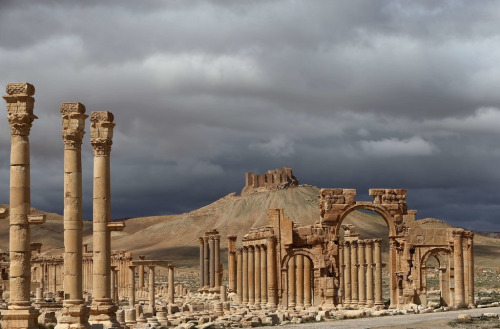
As Palmyra is subjugated by ISIS, its citizens are displaced, and the historic city is left in ruins, I happen on this passage from André Malraux’s The Voices of Silence:
Meanwhile, at a distance from Rome, an art akin to this seemed to be evolving. This was at Palmyra and in the Fayum, where the Roman forms came in contact with the Orient, as Greek forms had come in contact with Asia at the foot of the Pamirs. No doubt the Roman forms had been becoming less and less stable, and Rome did not need Byzantium to make her forget the art of Trajan. The basic elements of the Arch of Constantine and his colossal statue were already in a style directly opposed to what we call the Roman style. What was petrifying Roman figures was not yet Christianity, but the creeping paralysis of Rome herself. The Caesarian gesture was dead and the artists’ problem was not the finding of a new gesture to replace it, but one of somehow breathing life into the inert.
There may well have been other Palmyras, but, if so, they are unknown to us. The Palmyra we know was a desert port of call, but a military one; it was in this oasis that the Romans recruited the Arab cavalry they so often needed in Syria. This much-belittled art which in so many ways adumbrates Byzantine lasted nearly as long as French Romanesque. (How easy it is to imagine a history of art in which the Renaissance would be treated merely as a fleeting humanistic episode!)
Malraux in The Voices of Silence framed an aesthetic of metamorphosis, in which artistic styles are seen metamorphosing one into another across space and time. Often he expressed this through imagery of creative destruction; and often, as in the passage above – let’s imagine the Renaissance as fleeting, not central, he says – he shattered familiar art-historical narratives and put them together in new ways.
It’s striking – and appalling – to see Malraux’s metaphors re-literalized as great and enduring works of art are subjected to actual destruction at the hands of ISIS. Is the ruin of the artistic heritage of Palmyra a loss pure and simple, or is it a stage in the process of artistic metamorphosis? Malraux (to judge from The Voices of Silence) would doubtless say the latter, and a Times opinion writer says “Calm down”– but in the here and now the destruction of Palmyra looks like destruction, full stop.
Amtrak’s Secret: It Works

Amtrak regional train 188 is “my train.” I am one of the many thousands of people who take Amtrak regularly from New York to Washington and back, and I have taken the 7:10 regional train out of Washington dozens of times. On Thursday – after three eventful days at Georgetown – I returned to New York by Greyhound instead, and the experience underscored what most of us Amtrak regulars know, even if we rarely acknowledge it: that Amtrak’s Northeast Corridor system generally works very well, and that we couldn’t imagine our working lives without it.
Facing competition from Megabus, Boltbus and other low-cost carriers, Greyhound now runs new, clean buses, with more legroom, leatherish seats, and functioning wi-fi. From Washington, buses depart from Union Station, up an escalator from Amtrak’s platforms, and on a pleasant day like yesterday, waiting there, under a roof but in the open air, is more civilized than waiting for Amtrak downstairs.
And yet Greyhound is still Greyhound. Buses for New York were scheduled to depart at 8:30 and 10 a.m. As the 8:30 bus was delayed, passengers for the two buses formed a single bloblike queue. The staff seemed to know little more than the passengers, who quarreled with the staff and one another. The 8:30 bus finally pulled in more than an hour late, at 9:40 – ten minutes after the 10 o'clock bus pulled in. So passengers with tickets for the later bus (I was one) boarded and departed earlier. But the bus wasn’t on time for long. Due in New York at 3:30 – after a five-hour journey with stops in Baltimore; Mt. Laurel, N.J.; and Newark – the bus lingered in Baltimore and wound up arriving at 4:30, more than an hour late, and eight hours after I’d arrived at Union Station in the first place. And although the bus was new and clean, the ride is still an essentially captive experience, with no stop for a snack or a stretch of the legs.
By contrast, trains on Amtrak’s regional service – such as wrecked train 188 – make the trip in about three and a half hours. In my experience, trains that run in the daytime are on time 14 times out of 15; only the late-night trains seem regularly to run into long delays. The regional trains are swift and reliable enough that those of us who sometimes take the high-speed Acela (2 hours 50 minutes from New York to Washington) routinely calculate whether it’s worth paying the much higher fare for the high-speed train when the regional train will take only 35 or 40 minutes more to get there. And in some ways the regional train is preferable to the Acela, with better colors and lighting, full tables in the cafe car, and a little more room in the aisle for those of us who like to amble during the ride.
When Amtrak is safe, it works, and its speed and comfort are a privilege. It’s not cheap; and its relative efficiency likely comes at the cost of safety, too. It’s likely that those regional trains run on time – or ahead of time, to the delight of passengers – because engineers exceed the speed limit. According to a notice that popped up when I Googled “Amtrak train 188” a few minutes after Tuesday’s crash, train 188 was delayed 15 to 18 minutes out of Washington that evening due to a mechanical problem. Maybe the “mechanical problem” was on the tracks north of Philadelphia. Or maybe the engineer was speeding to make up the lost time.
I hope some other writer is looking into it. Meanwhile, I expect to ride “my train” 188 dozens of times in the years to come.
Vin Scelsa: Free Form’s Joey Ramone
Vin Scelsa did his last radio show over the weekend. (So he says.) He began the last show (nearly) with the Velvet Underground’s “Sunday Morning,” and as is (was) so often the case for Vin, the song came with a story attached.
Before he was a disc jockey for WNEW, and satellite radio, and WFUV, where for the past twenty years or so he has made Saturday night a time for “Idiots’ Delight” –before all this, Scelsa was a student disc jockey at Upsala College, a Lutheran school in East Orange, New Jersey. As a rule the station signed off around midnight, but Scelsa and some friends of his on staff decided that it was time to liberate the station for round-the-clock programming. The Saturday of Memorial Day weekend 1968, they played records all night long – free-form – and at five a.m. Vin played the Velvets’ “Sunday Morning”: now it was Sunday morning. Because the school year had just ended, “nobody noticed our act of insurrection,” he recalled on his last broadcast. “It was the sixties, man …”
I confess that I couldn’t stand Scelsa’s show when it aired Sundays before noon on WNEW. It was too much like Sunday morning– too much like church; his free-form ruminations suggested a bad homily more than the glories of free-form radio. Then the show was moved to Saturday nights and I signed on and fell for it hard. For parts of ten years Saturday night in my apartment was a writing night – free-form, with no office work that day or the day after – and I wrote dozens of pages of each of two different books while listening to Vin Scelsa play records by Bruce Springsteen, the Ramones, the Clash, and dozens of other artists who could be heard to embody the spirit of free form.
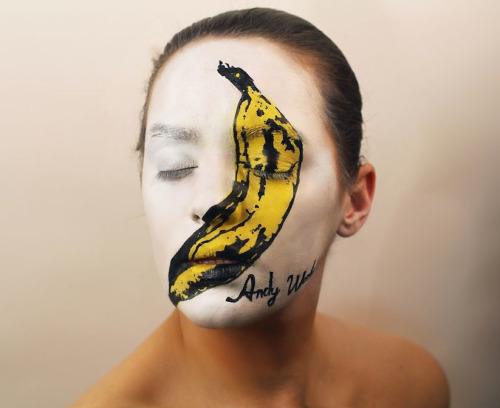
That I am writing this at night – Sunday night – is evidence of the inspirational qualities of music after hours programmed in free form. So is the image of an artist who decorated herself with the image from the Velvet Underground’s “banana” LP sleeve to mark Record Store Day. The newyorker.com story that the image accompanied likened the Rough Trade record shop in Williamsburg, Brooklyn, to a “a physical iTunes,” and the neologism suggests how dramatically “free form” has changed – has gone into new forms – since Vin Scelsa toted his Velvet Underground and Sopwith Camel LPs (the latter he still has) to the Upsala College studios.
I’ll never forget the night Black 47 played Symphony Space and Vin joined them onstage, singing – and dancing – free-form to “Like a Rolling Stone.”
Stay free, Vin.
The Gift That Is Given Back
“On
the street, I paused a moment to commune with William Scheide’s
ghost. Scheide, who amassed one of the world’s great collections of
Bachiana, including one of two portraits of Bach that are considered
authentic, had died in Princeton earlier in the week at the age of
one hundred.”
That was last November, after a marathon performance of Bach’s organ music at St. Peter’s Church in Manhattan (which I would write about for newyorker.com). Scheide was dead, and his extraordinary run of contributions to the ongoing life of Bach’s music seemed to be over.
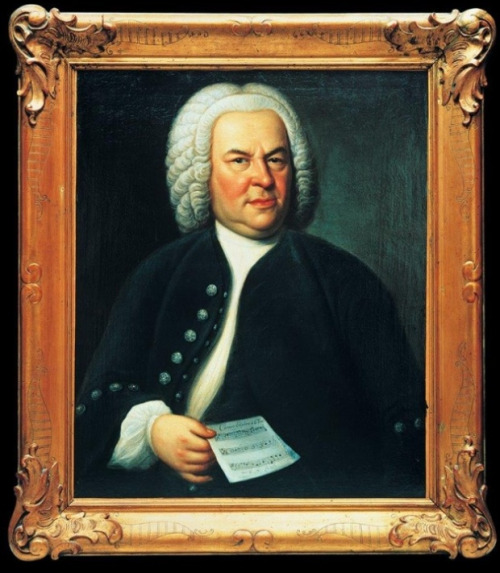
But no. From the grave – via the instrument of his will – Scheide has arranged for the portrait of Bach that he has kept in Princeton for decades to be returned to Leipzig, where Bach lived and made music in the last two decades of his life:
“Bach is Coming Home!” For once a press release gets it pretty well bang-on …
That Guardian piece (by Tom Service) and one by Zachary Woolfe in the Times tell the pretty extraordinary story of how the portrait got from Leipzig to Princeton and back again, and how it happened to make a long sojourn in the boyhood home of John Eliot Gardiner – the great interpreter of Bach’s choral music – along the way. The Guardian also unpacks the handwritten “puzzle canon” that Bach is shown holding in his right hand and explains some numerological correspondences.
What I see in the painting (and spell out in Reinventing Bach) is the way Bach took even the occasion of a portrait as an occasion to compose. The portrait was painted to mark Bach’s membership in a “correspondence” society of composers, who sent work to one another through the mail. The canon is one he had written as a condition of his membership, and through the painting the “correspondence society” comes to stand for Bach’s listeners then and now and the canon as a musical “offering” not just to them but to us:
It is turned outward to face us, as his offering to the Society of Musical Science. At the top is the title Canon Triplex a 6 voci. It is one of the canons he had written out on the back of the published text of the Aria with diverse variations. The whole thing is there on a single page, notated in the painter’s close imitation of the composer’s handwriting, so clearly that you could prop the portrait on a music stand and play the piece from it. It makes the portrait itself, already artful, a piece of music; it makes us members of the society, receiving Bach’s music through correspondence with him.
“Art is the gift that is given back,” as Lewis Hyde has it, and William Scheide has given new life to this work of art – and to Bach’s art – by returning the portrait to Leipzig, if only because it is something like the only one.
Poets, Essayists, and Novelists
For two days I’ve wondered how to think, and how to write, about the controversy over PEN’s awarding its “courage” prize to Charlie Hebdo; and then this afternoon the answer came in the mail, in the form of a big book of literary criticism: Harold Bloom’s The Daemon Knows.
Bloom’s book is subtitled Literary Greatness and the American Sublime, and to judge from the flap copy and the first few pages it has everything and nothing to do with the controversy – and with why I, although a member of PEN, a past PEN prize winner, and a judge of one of this year’s book prizes, feel, or am made to feel, something other than competent to express an opinion on the Charlie Hebdo controversy.
Why? Here’s why. PEN, as I understand it – I haven’t gone to Wikipedia or whatnot – originally stood for Poets, Editors, and Novelists. That is, it was a literary organization, not an organization devoted principally to the defense of free expression in all its forms.
Of course, it has always had an extraliterary dimension: as I recall, some great literary critic drily derided Stephen Spender for his PEN Club activities, which the critic saw as detrimental to Spender’s writing. And of course the question of what writing qualifies as “literary” writing is even harder to answer than the questions about Charlie Hebdo that various people are trying to answer.
But just now, it seems to me, the free-expression dimension of PEN is trumping the literary dimension. So while five of us judges consider the literary merits of 140 books among us and deliberate about which one deserves the Galbraith Prize, the organization’s leaders, by processes I don’t understand, decide to award one prominent prize to Charlie Hebdo, which isn’t a literary publication and was never intended to be. And then one of PEN’s members – Deborah Eisenberg, a genius of short fiction – writes a letter to dissent from the choice, and offers a slate of alternative candidates: Edward Snowden, Glenn Greenwald, Laura Poltras, and Chelsea Manning: heroes all, and most of them heroes of mine, but none of them Poets, Essayists, or Novelists, and only Greenwald a writer in the common sense of the term.
Meanwhile, I am saying to myself: alas, I don’t read French any better than I did in college; didn’t know Charlie Hebdo till the controversy; am far from expert on the situation of Muslims in France or the current forms of French secularism and anticlericalism; and have only a developing understanding of the relationship between satire, visual forms of free expression, and Muslim scruples about the depiction of the Prophet. I am a writer . . . can it be that, even in PEN, the international writers’ organization, I am “just” a writer …? In the case of Salman Rushdie’s novel The Satanic Verses, the manifest literary greatness of the book scotched all other arguments. But here? …
I’ll leave it to somebody else to weigh in on whether we the members of PEN ought to have been consulted about the recipient of the “courage” prize, the way we are asked to vote for slates of candidates for the PEN leadership every couple of years. The Academy of Motion Picture Arts and Sciences roots certain of its awards in the votes cast by members; why shouldn’t this particular literary society?
Meanwhile, PEN might take a cue from Harold Bloom. For sixty years this polymath has practiced literary criticism – sometimes in the broadest sense, sometimes more narrowly, but only rarely (I am thinking of his book on the Mormons) as anything but literary criticism, as writing about other writing.
It seems to me that PEN, while remaining firmly committed to free expression, might focus its gaze a little more tightly on literary expression – on written texts that can be read, evaluated, and judged on their merits as written texts, the way the five of us judges are reading, evaluating and judging the books for the Galbraith Prize.
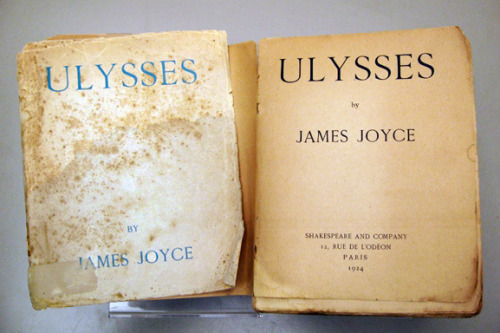
The image is of the first edition of James Joyce’s Ulysses, published in Paris in 1924 after Anglophone publishers decided it was too risky to publish.
This Is London, City of (Eighty) Billionaires
The collective net worth of Britain’s wealthiest one percent has doubled since the financial crisis of 2008.
That news – reported laconically over the weekend in a business story on the Guardian’s UK home page – is an astonishing flat-world counterpart to the news of the earthquake that struck Nepal.
How on quaking earth has the net worth of Britain’s wealthiest one percent doubled in six years? Through use of the same investment mechanisms that the financial crisis brought to light, I’d bet. Because how else? There hasn’t been any remarkable new commercial enterprise – like railroads in the middle of the nineteenth century, computing and the Internet at the end of the twentieth – that would have produced such an upswell in wealth. There hasn’t been an annexing of new territory, as happened after the Spanish-American War, or an opening of formerly closed markets as happened post-1989. There hasn’t been a regime change, a revaluation of the currency, or a profound restructuring of the tax system – all ways in which rich people have doubled their money in other times and places. The UK economy hasn’t been spectacularly successful – or even notably more successful than that of its obvious counterparts, as far as I can tell. Nor as far as I know has there been a single phenomenally successful Briton – a J.K. Rowling, like, say, the Beatles before her – who earned so much money so quickly that her success boosted all the superwealthy.
No, it’s probably just the case that for the wealthiest one percent, the doubling of one’s net worth in six years is the new normal, a simple matter of people engaging other people to make their money work for them. And the “financial crisis”: that wasn’t a crisis. That was actually a soft opening for the global financial system’s current production (“Bigger and Better Than Ever”) – a chance for the people who run things to work out the kinks in the production and gain a few extra accommodations from their friends in government before the actual opening, which is what we are now in.
Down in the Corner
One of the truly great pieces of sports writing I’ve read is “Mad Cathedral,” by my friend Thomas Kelly, an essay published in Esquire in 1998. It’s a love song to the old Yankee Stadium, and a fight song raised up when the Yankees were threatening to build a new stadium on the West Side of Manhattan or in New Jersey. Tom’s argument is that the old Stadium is so full of ghosts – of players past, of family members lost – that it can’t be rebuilt or replaced, and it’s heartbreakingly persuasive.
So I feel a little guilty, and a little shallow, going to the new Yankee Stadium and simply enjoying myself – feeling that the new Stadium is “close enough to the old one, in location and design, that all the old memories are still there.” And that’s one reason why going to NYCFC matches at the Stadium is so enjoyable. All the old memories are still there – but they’re not burdened with comparisons to the old Yankee Stadium, or the old Yankee Stadium before the 1976 renovation, and so on.
An essay of mine about going to see NYCFC – that’s New York City Football Club – is up on the New Yorker web site. (It’s my fifth piece there, I’m happy to say.) I think of it as a pendant to Tom’s great essay, a shout-out to the Ghosts of Stadium Present alongside his hymn to the Ghosts of Stadium Past.
The Lone Correspondent, Yesterday and Today
The shortlists for this year’s PEN Literary Awards were just announced, and the five of us who are judges for the PEN / John Kenneth Galbraith Award settled on five works of general nonfiction from 2013 and 2014.
The other five books on the longlist are strong in their ways – and their strengths support the case for the recent move toward longlists by PEN, the National Book Awards, and other prize-giving bodies.
Clay Risen’s The Bill of the Century, for example, carries a passage that by-the-by and matter-of-factly serves to counter several cherished ideas – clichés – of writing about the media just now.
Here’s the passage:
The members of the United States Senate slogged their way to the Capitol on the morning of Monday, March 30, through a freak early spring blizzard that dropped five inches of snow on Washington. In the midle of the storm, just outside the massive edifice, stood CBS News correspondent Roger Mudd. A D.C. native and a rising star on CBS’s national news reporting staff, Mudd had made a name for himself covering such seminal events as the March on Washington and the Kennedy state funeral. In early 1964, Fred Friendly, the new president of the network’s news division, had suggested that Mudd cover the filibuster in a one-man, flood-the-zone campaign, “not only on the evening news with Walter Cronkite but also on each of the network’s four other TV newscasts and on seven of the network’s hourly radio newscasts,” Mudd later recalled. “My initial reaction was less than enthusiastic. It sounded more like a flagpole-sitting stunt.”
And here are the clichés it counters:
1- The notion that round-the-clock news coverage (the twenty-four-hour news cycle) is a thing of the present, whereas coverage in the past consisted of the evening news.
2 - … that the lone reporter is a product of today’s diminished news staffs, whereas the halls of the Capitol used to be full of correspondents, many from each network.
3 - … that TV news executives cooking up clever, gimmicky reporting (and being resented for it by their reporters) is a trait of our diminished media age, not of the past golden age characterized by the robust and conscientious CBS News and its anchorman, Walter Cronkite.
4 - … and that “unseasonal” snowstorms are evidence of climate change: way back in 1964, it was snowing in Washington at the end of March.
Truly, media commentators who don’t know the past are condemned to repeat it. That Clay Risen knows the past is clear all the way through his book.
The image is of Mudd outside the Capitol after the Kennedy assassination.
David Brooks: Calling the Outer Life
“I
came to the conclusion that wonderful people are made, not born —
that the people I admired had achieved an unfakeable inner virtue,
built slowly from specific moral and spiritual accomplishments.”
That’s David Brooks, introducing what I take to be the main idea of a forthcoming book. An idea he is calling –
“If we wanted to be gimmicky, we could say these accomplishments amounted to a moral bucket list, the experiences one should have on the way toward the richest possible inner life.”
Here’s hoping he comes up with a non-gimmicky name for the idea before the book is published – because the idea is an awfully good one. It fact, it may be the oldest, best good idea there is: the idea that we can learn how to be good, and even can become a little better, by finding out how exceptionally good people came to be good and trying to do likewise.
One of Brooks’ “deeply good people” is Dorothy Day, who, in this abridgment of his taxonomy of goodness, represents Energizing Love.
Dorothy Day led a disorganized life when she was young: drinking, carousing, a suicide attempt or two, following her desires, unable to find direction. But the birth of her daughter changed her. She wrote of that birth, “If I had written the greatest book, composed the greatest symphony, painted the most beautiful painting or carved the most exquisite figure I could not have felt the more exalted creator than I did when they placed my child in my arms.”
That kind of love decenters the self. It reminds you that your true riches are in another. Most of all, this love electrifies. It puts you in a state of need and makes it delightful to serve what you love. Day’s love for her daughter spilled outward and upward. As she wrote, “No human creature could receive or contain so vast a flood of love and joy as I often felt after the birth of my child. With this came the need to worship, to adore.
She made unshakable commitments in all directions. She became a Catholic, started a radical newspaper, opened settlement houses for the poor and lived among the poor, embracing shared poverty as a way to build community, to not only do good, but be good. This gift of love overcame, sometimes, the natural self-centeredness all of us feel.
The more I like a Brooks idea, the more niggly and correcting I am about it, and I like this one a whole lot. So I have to ask: Is it really right to identify goodness with “inner virtue” and the “inner life”? In doing so, isn’t Brooks still captive to the self-focused categories he is trying to break out of with this project? Isn’t a Dorothy Day – and isn’t this is what made her so radical – characterized by outer goodness, by the quality of her outer life?
The photograph is of a signpost indicating public footpaths in Marshlands, East Yorkshire.
Talk About the Passion (While You Watch It at Home in HD)
Holy Week came early this year – camelast fall, in fact, when Peter Sellars and Simon Rattle brought their semi-staged version of Bach’s St. Matthew Passion to the Park Avenue Armory.
I got to go, and got to write about it for this site; so did Alex Ross, who joined David Remnick in the lobby at the act break. (Alex wrote about it for the New Yorker.)
Now
– ‘tis the season – I am seeing it again, on a video available
through the Berlin Philharmonic’s website. (Type in the code “WQXR”
for a 48-hour pass.) It’s a strange experience. It’s strange to see
the singers performing while they sing. It’s stranger to see them in
the close-ups the camera affords (a bared shoulder, a pair of hands
clasped, Evangelist Mark Padmore’s throat corded with tension during
an aria). It’s stranger still to watch the Passion at my desk,
toggling back and forth between a piece of writing and a Bach Passion
every few minutes – from the sound of the Passion
to the sight of it.
Or
is it so strange? This desk – this square yard of space in
Brooklyn – is where I have listened to several thousand hours of
the recorded music of Bach over the years; and the listening was
undertaken in part with the end of finding words for the cultural
change that such an experience reflects – for the range of
encounters with the music of Bach that new technology has made
possible. That is the idea of Reinventing Bach.
What’s
different this time, here at my desk, is that the technology is video – and it’s with
the ubiquity of video in mind, I suspect, that Sellars and Rattle
devised this semi-performed interpretation.
There
are 30 hours left on my 48-hour pass; I’m going back to Sellars’
Passion now.