by Paul Eliefrom Georgetown University
At PEN, Prizing Narrative Art
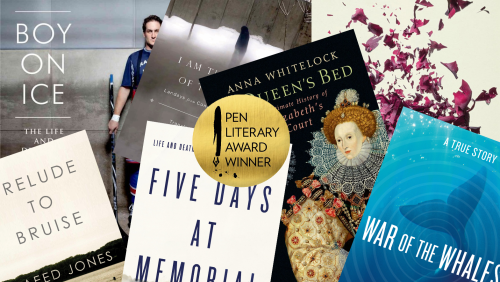
PEN presented its book awards the other night, and Andrew Solomon struck the right note when he pointed out that the night was devoted not to freedom of expression but to excellence of expression.
As a judge of the nonfiction prize – the PEN/Galbraith Award for Nonfiction – I had a hand in the citation for the winner, Five Days at Memorial, by Sheri Fink. The citation is a compact effort to frame books of this kind not as nonfiction, or current affairs, or cultural history, or reportage, but as narrative art, and to articulate something like a narrative artist’s ars poetica:
How do we, individually and as a society, make crucial decisions about matters of life and death?’ The question was posed again and again in 2005 as Hurricane Katrina ravaged New Orleans, and it is the underlying question in Sheri Fink’s Five Days at Memorial, a book that finds in the events that took place in one tempest-tossed New Orleans hospital a story, biblical in its elemental grandeur, about matters of life and death. Five Days at Memorial has all that one could wish for in a work of narrative art: comprehensive reportage, vivid and sensitive depictions of living people, a human sense of the immediacy of events and of the sprawl of underlying conditions (social, political, medical, financial) that placed those people in the circumstances to make the decisions they made. Life must be understood backwards but lived forwards, Kierkegaard said; and Five Days at Memorial shows the power of narrative art to enable us to understand life backwards so that we might live our lives forwards with greater understanding.
A narrative artist’s ars poetica: That was a lot to lay on the person to whom I explained it at the reception afterwards, but that’s what I had in mind.
Maybe some future PEN ceremony will feature an award for best work of narrative art.
Poets, Essayists, and Novelists
For two days I’ve wondered how to think, and how to write, about the controversy over PEN’s awarding its “courage” prize to Charlie Hebdo; and then this afternoon the answer came in the mail, in the form of a big book of literary criticism: Harold Bloom’s The Daemon Knows.
Bloom’s book is subtitled Literary Greatness and the American Sublime, and to judge from the flap copy and the first few pages it has everything and nothing to do with the controversy – and with why I, although a member of PEN, a past PEN prize winner, and a judge of one of this year’s book prizes, feel, or am made to feel, something other than competent to express an opinion on the Charlie Hebdo controversy.
Why? Here’s why. PEN, as I understand it – I haven’t gone to Wikipedia or whatnot – originally stood for Poets, Editors, and Novelists. That is, it was a literary organization, not an organization devoted principally to the defense of free expression in all its forms.
Of course, it has always had an extraliterary dimension: as I recall, some great literary critic drily derided Stephen Spender for his PEN Club activities, which the critic saw as detrimental to Spender’s writing. And of course the question of what writing qualifies as “literary” writing is even harder to answer than the questions about Charlie Hebdo that various people are trying to answer.
But just now, it seems to me, the free-expression dimension of PEN is trumping the literary dimension. So while five of us judges consider the literary merits of 140 books among us and deliberate about which one deserves the Galbraith Prize, the organization’s leaders, by processes I don’t understand, decide to award one prominent prize to Charlie Hebdo, which isn’t a literary publication and was never intended to be. And then one of PEN’s members – Deborah Eisenberg, a genius of short fiction – writes a letter to dissent from the choice, and offers a slate of alternative candidates: Edward Snowden, Glenn Greenwald, Laura Poltras, and Chelsea Manning: heroes all, and most of them heroes of mine, but none of them Poets, Essayists, or Novelists, and only Greenwald a writer in the common sense of the term.
Meanwhile, I am saying to myself: alas, I don’t read French any better than I did in college; didn’t know Charlie Hebdo till the controversy; am far from expert on the situation of Muslims in France or the current forms of French secularism and anticlericalism; and have only a developing understanding of the relationship between satire, visual forms of free expression, and Muslim scruples about the depiction of the Prophet. I am a writer . . . can it be that, even in PEN, the international writers’ organization, I am “just” a writer …? In the case of Salman Rushdie’s novel The Satanic Verses, the manifest literary greatness of the book scotched all other arguments. But here? …
I’ll leave it to somebody else to weigh in on whether we the members of PEN ought to have been consulted about the recipient of the “courage” prize, the way we are asked to vote for slates of candidates for the PEN leadership every couple of years. The Academy of Motion Picture Arts and Sciences roots certain of its awards in the votes cast by members; why shouldn’t this particular literary society?
Meanwhile, PEN might take a cue from Harold Bloom. For sixty years this polymath has practiced literary criticism – sometimes in the broadest sense, sometimes more narrowly, but only rarely (I am thinking of his book on the Mormons) as anything but literary criticism, as writing about other writing.
It seems to me that PEN, while remaining firmly committed to free expression, might focus its gaze a little more tightly on literary expression – on written texts that can be read, evaluated, and judged on their merits as written texts, the way the five of us judges are reading, evaluating and judging the books for the Galbraith Prize.
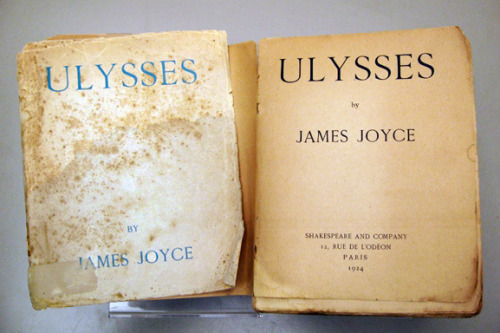
The image is of the first edition of James Joyce’s Ulysses, published in Paris in 1924 after Anglophone publishers decided it was too risky to publish.
PEN/Galbraith: Eyes on the Prize
Is it possible to judge too many bookprizes?
It is, if this little essay from a few months back is any indication. That’s a writer and publisher, long in service to literature, made weary by his required reading. It puts in mind his remark in The New Yorker some years ago to the effect that nobody in New York reads a book just to read it anymore.
Myself, I am still a newbie prizewise. Last year I judged the Barnes & Noble Discover Award for nonfiction, and this year I was chosen as a judge for the PEN/John Kenneth Galbraith Prize – for “a distinguished book of general nonfiction possessing notable literary merit and critical perspective and illuminating important contemporary issues.”
Last year, that is, I was reading first books of nonfiction, most of them memoirs by people in their thirties. This year it’s the whole spread of less personal nonfiction (leaving out biography and autobiography) published in the past two years: history, long-form reportage, war correspondence, political argument, and plenty of books about fresh ideas in food and health and technology.
So it is that in our small apartment, which has two bathtubs, one bathtub is brimful of current hardback nonfiction, something like a hundred and forty books haphazardly arranged.
So it is that several nights a week I am on a soccer sideline or in the driver’s seat of our parked car reading ample new nonfiction books.
And reading them carefully, I like to think. For one thing, my own first book, The Life You Save May Be Your Own, was given the PEN/Martha Albrand Award for first nonfiction a few years back – because somebody in my current position took the trouble to read it carefully.
For another, this is prize-judging, not editing and publishing. Three years away from an editing role with FSG, I am still amazed and relieved that I can read a book and consider its strengths and weaknesses without having to figure out how to fix it and publish it.
It’s hardly service, to tell the truth. It’s more like reading books just to read them.
The recipients of the PEN Literary Awards will be announced June 8, and PEN has already been praised for the diversity of the current group of judges.