by Paul Eliefrom Georgetown University
Francis: “Let No One Say, `This Can’t Be Said’ …”
“Reading through Hilary Mantel’s vastly entertaining new collection of stories,” the Stanford literary critic Terry Castle explained yesterday, “I had an experience that, given my day job (literature professor) and age (implacably advancing), hasn’t happened in a while: I ran into an English word I had never seen before.” The word is blebs, as in “in the beds of this garden the roses were already scorched into heavy brown blebs on the stalk.” A bleb, Castle has since learned from the OED, is “a blister or small swelling on the skin; also a similar swelling on plants.”
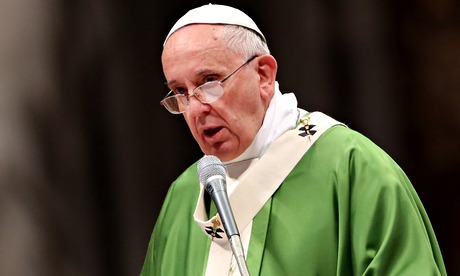
I had something like the same experience reading through Pope Francis’s address to the bishops and assembled others at the first session of the Extraordinary Synod on the Family. The word is parrhesia, as in Francis’s declaration that at the synod, “Everything we feel must be said with parrhesia.”
Parrhesia, I’ve since learned from Michel Foucault, is something like “free speech” or “truth-telling”; if you are a Wikipedian rather than a Foucaldian, it is “to speak candidly or to ask forgiveness for so speaking.” Here is what it means for the man who called the synod:
Let no one say, ‘This can’t be said, they will think this or that about me.’ Everything we feel must be said with parrhesia. After the last Consistory in February 2014, which focused on the family, a Cardinal wrote to me saying that it was a pity that some cardinals did not have the courage to say certain things out of respect for the Pope, thinking perhaps that the Pope thought differently. This is not good – –it is not synodality, because it is necessary to say everything that in the Lord we feel must be said: without human respect, without timidness.
There in the act of calling for parrhesia, Francis showed what it means by practicing it. He said what he what he feels must be said: Brothers and sisters, please, please, please speak your minds …
Meanwhile, Sylvia Poggioli’s NPR piece about the synod made an old word new. The word is merciful, as in “Vatican Synod Tests The Pope’s Vision Of A More Merciful Church.” Better than open, or pathbreaking, or extraordinary, this sturdy piece of theological idiom fits Francis’s papacy altogether.
I honestly can’t remember the last time I saw the word merciful in the headline of a news story (can you?), and the sighting of it seems significant. Maybe mercy is back. May parrhesia follow.


