
by Paul Eliefrom Georgetown University
Footsteps
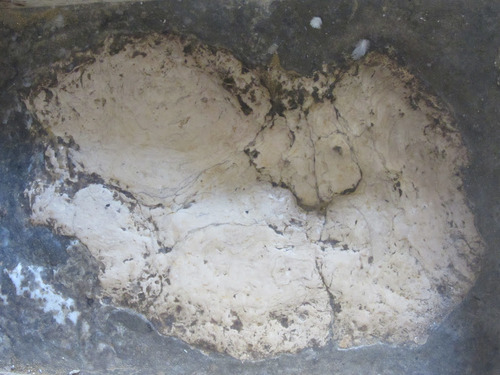
James Martin’s Jesus: A Pilgrimage is quickly becoming a go-to book – a book I go to for reference or reflection on particular feast days, such as the Feast of the Ascension (observed Thursday and today). The 159 customer reviews on Amazon suggest that it has become a go-to book for plenty of others, too.
Martin’s passage about the Ascension is the culmination of the story he tells, in that it brings together Jesus’s earthly pilgrimage with his own pilgrimage to the Holy Land and the pilgrimage of Ignatius of Loyola, founder of the Jesuits, who went to the region specifically to see the Chapel of the Ascension on the Mount of Olivet – and swapped a penknife and scissors with the guards for permission to enter.
Ignatius’s career as a soldier had come to an end when he took a cannonball in one leg in 1521, and the time he spent immobile while recuperating – the time he spent unable to walk – prompted his change of life. So it is telling that he what he wanted to see at at the Chapel of the Ascension was, specifically, “the stone on which Jesus was standing before the Ascension – and where, legend had it, he left behind two footprints.” And it’s telling that he was nearly kept from doing so: by his trouble walking, and by violence in the region, which led some Franciscans to force him to leave: “But not before Ignatius could see the chapel commemorating the Ascension.”
It’s telling because in this episode the whole pattern of pilgrimage is incorporated in compact. On a pilgrimage, you strive to walk in the footsteps of significant others who went before you, and then to tell the story to others who will follow. Richard Holmes, in a passage from his book Footsteps that has served as a kind of ars poetica for my own work, makes the pattern of pilgrimage, the following in the footsteps of one’s subject, a figure for the “`vocation’ called biography.”
So there is an inner logic to the pilgrimage to the footsteps said to be those of Jesus himself. In this pilgrimage, the figurative journey that is the pilgrimage is made powerfully literal. You follow footsteps to the footprints. And the image of the footprints of divinity, so to speak, brings out the inner logic of the Ascension: not that Jesus rose into heaven, but that he walked on earth in the first place.
Twenty centuries later, Martin and another Jesuit entered the chapel:
Today it is a simple, small stone building, shaped like an igloo, with an opening in the domed ceiling. We paid a Muslim caretaker a few shekels to enter (not having a penknife or scissors).
Inside were roughly twenty Indian pilgrims. Their priest was reading from a Bible in Malayam, presumably about the Ascension. George and I squeezed in. Suddenly they started singing a lovely hymn, which sounded almost like a chant. It seemed to float up to the ceiling through the oculus in the roof. In between the feet of our fellow pilgrims we could see a small, shiny, uneven stone in the floor, bordered by a marble square. Two indentations in the rock were clearly visible. After two weeks of feeling connected to Ignatius, the poor man with a limp who, knowing he was being kicked out of the Holy Land, walked painfully up the Mount of Olives to pay his devotion to the site on which he believed Christ had stood.
After Ignatius snuck into the chapel, one of the Franciscans got wind of it, entered the chapel, grabbed him by the arm, and led him away. But for Ignatius, seeing those footprints was enough.

