
by Paul Eliefrom Georgetown University
How to Extend a Metaphor
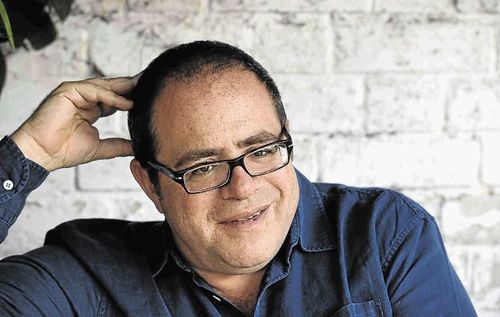
Happy is the writer who finds a figure he can use to animate an entire book —- and use to figure out a personal truth in the process.
Mark Gevisser is such a writer. His memoir Lost and Found in Johannesburg is animated by his lifelong preoccupation with maps. As a boy in the Johannesburg “suburb” of Sandon – a modern, restricted white neighborhood well within city limits – he played a game he called “Dispatcher” by using the phone book and Holmden’s Register of Johannesburg to imagine sending a “courier” to other parts of the city to meet other people. And through the game he came to understand the central fact about his native city and his native country:
Inevitably, Dispatcher took me places I was not meant to go. I stumbled across one of the few African names in the Johannesburg telephone directory – let’s call him “Mphahlele, M.” – with an address in Alexandra – and discovered how intent Holmden’s was on actually losing me. I had, of course, heard of Alexandra: it was that thing called a “township,” that place where the black people who worked for us would go to church or to visit family on their days off.
… I now discovered that Mr. Mphahlele lived only two pages away from us, on page 77, far closer than Granny Gertie’s hotel or even my school in Victory Park. Even now, I can recall my frustration at trying to get my courier to his destination in Alexandra: there was no possible way of steering him from page 77 across to page 75.
Apartheid means apartness, and he had discovered that the city map, indeed the city, was arranged so as to keep certain people apart.
Gevisser goes on to develop the maps-and-dispatcher motif all through the book —- no big problem, because his life has involved following maps and going to places he was not meant to go: to Joburg’s bohemian and gay neighborhoods; to the historically mixed-race neighborhood where he bought his first house; to the townships as a journalist and activist; and to the police headquarters in downtown Johannesburg after he and two friends were abducted in the friends’ apartment. A reporting assignment takes him to Alexandra, where once upon a time he could not go, and there he speaks with Paul Mashatile, the culture minister for the government.
Mashatile – a couple of years younger than me – laughed when I asked him if he had ever used the Holmden’s or the Street Guide to Witwatersrand. “We had our own maps,” he said. “They were in our heads. There were no straight lines on them. How do you think we organized so effetively?” … The reality of life in Alexancra – roiling and transitory, unstable and unlit (it remained without electricity until the 1980’s) – defies its Cartesian geometry, its tyranny of line.
Lost and Found in Johannesburg its itself a map or guidebook of a kind; and Mark Gevisser – smart, wise, personable, experienced, humble in the face of his city but fearless when he has to be – is an ideal guide.
