by Paul Eliefrom Georgetown University
Courtyard of the Common Good
The common good: the expression must have been uttered threescore and ten times in the sessions of the Courtyard of the Gentiles event at Georgetown yesterday: a panel discussion about the common good and politics and one about the common good and the arts, each followed by a pair of informal sessions in tents outside Healy Hall under the clear blue sky. But the effect was the opposite of repetitive; it led us to think – led me to think, at any rate – of the hidden dimensions of this term that is itself common.
The thrust of the politics session was that the sense of the common good is imperiled in Washington, a state of things that makes it all the more vital for non-state actors to affirm the existence of the common good and to urge, inspire, and organize people to strive for it together.
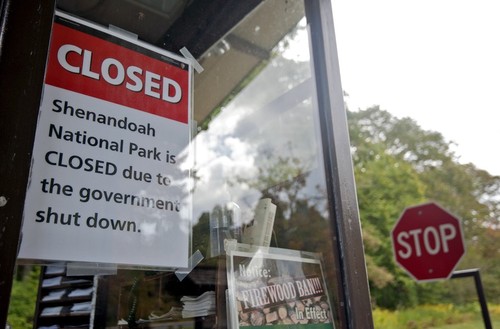
That’s obvious (or should be obvious). But what came clear to me for the first time – especially through the remarks of of the Cal-Berkeley sociocultural anthropologist Saba Mahmood – is the relationship between our idea of the common good and the state of the common goods in our society: schools, infrastructure, parks and public spaces, and other goods called “the commons” (nature, air and water, and so on). The relationship cuts two ways: as our sense of the common good diminishes, our common goods are privatized or allowed to atrophy; and as our involvement with those common goods diminishes in consequence, our sense of the common good is weakened further – because it is through shared experiences in schools, parks, public spaces and the like that the idea of the common good is cultivated.
The arts session was more confident about the common good, I am happy to say. Robert Pinsky gave a robust account of poetry as a common good still cherished in our society, claims about the end of literacy to the contrary. Alice McDermott explained that the distinct but uncluttered Catholic language of her work is the way her characters express their sense of the common good – an approach that finds a parallel in the work of Ayana Mathis, whose dozen protagonists in The Twelve Tribes of Hattie are bound together by family ties and common experience in the Pentecostal church. And Alan Lightman, schooled in hardheaded scientific justification, gave an account of the truths of art as truths that we recognize individually and personally – with the implication that what we call classics are works whose truths register not just individually and personally but in communities or across a society.
The effect of the day was to suggest that open discussion of ideas in forums such as the Courtyard event – which was free and open to the public and was attended by several hundred people – is itself a common good to be cherished rather than taken for granted.


