
from Georgetown UniversityPaul Elie, authorFollow @ETR_GU
Will Campbell, Southern Churchman
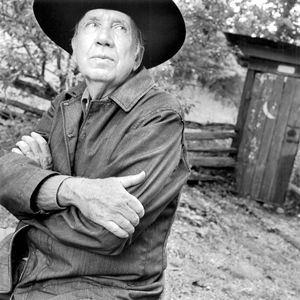
Will Campbell is dead: pastor, gadfly, stylized apostate, and founder of the Committee of Southern Churchmen, a group of white pastors committed (in the teeth of racist opposition) to the advancement of black civil rights in the South. The Times obituary is here; a 1990 Rolling Stone by Lawrence Wright is here, with a ten-dollar headline —- “The First Church of Rednecks, White Socks, and Blue Ribbon Beer” —- and the portrait above by Mary Ellen Mark. With Campbell passes the category of churchman, or so it seems to me. Does anybody, even in the South, call himself a churchman anymore?
It was Campbell who arranged the only meeting of Walker Percy and Thomas Merton. He enticed Percy to join the advisory board of the Committee’s magazine, Katallagete, by pointing out that Merton was also a board member and suggesting that sooner or later the board would hold a meeting at Merton’s hermitage at the Abbey of Gethsemani in Kentucky. In July 1967, they did, a story told in my book The Life You Save May Be Your Own:
Merton was sitting on the porch of the hermitage when they arrived. He rose and greeted them, and Percy introduced himself, calling Merton Father Louis. Percy had envisioned a lean man in a white robe. Merton was robust, dressed in jeans and a T shirt —- “a sturdy, well-met fellow,” Percy recalled. “… If you met him in a crowd or on the street you wouldn’t pick him out as extraordinary looking.”
Merton had a camera and an open bottle of bourbon at his side. He poured the churchmen a round of drinks, and the conversation began: race, peace, the war in Vietnam, nonviolence —- which, he declared, was hard to define. Even the Trappists were violent, he said, pointing toward the monastery, and gave a roundabout explanation. Once upon a time the Trappists at the food they grew themselves. Now they made “Trappist cheese” for the Catholic holiday market. Work for God had turned into capitalist exploitation, a kind of violence. “Look at the way they exploit these brothers, these monks —- they got to break their asses carrying all this cheese around.”
Percy was surprised by Merton’s lack of reverence. He didn’t necessarily go along with the idea that manual labor was a form of violence, but he didn’t object aloud.
Percy recalled his visit in an interview with presented in Conversations with Walker Percy.
