
by Paul Eliefrom Georgetown University
Welcome Back, Andrew Sullivan
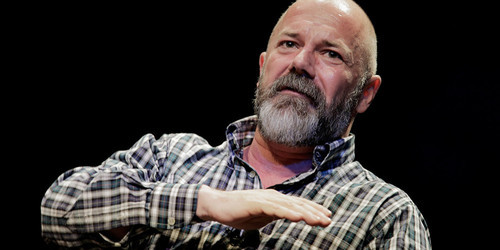
Over on The Dish – and in the traditional or “legacy” media too – the encomia keep coming:
digital pioneer, end of an era, death of a format. But
the obvious truth is that it’s not an end, it’s a pause, and soon, for the first time in fifteen years Andrew Sullivan will be
back with us as a long-form writer.
Andrew Sullivan who wrote the best piece about Catholicism published in my lifetime; Andrew Sullivan who spotted Joseph Ratzinger as a man of outsize consequence for us all way back in 1988; Andrew Sullivan who defined a character type, now ubiquitous, with his Spypiece about resume-bulked Rhodes Scholars; Andrew Sullivan who dared to write a piece about AIDS called “When Plagues End” – and then to spell out all the ways AIDS was ending against the context of all the ways it would not end any time soon.
If you ask me, it was nuts all along that writers as talented as Andrew – or Leon Wieseltier, for that matter – wound up with management and fundraising and administrative duties at all. It was evidence of their determination to keep it real that they spent so much of their talent arranging things for the rest of us: signing up our work, citing our pieces, linking to them, and so on. The paradox in Andrew’s case is that the term “blogger,” with its stereotype of a man in pajamas attached to a computer, concealed the fact that Andrew obviously spent huge stores of energy – more and more as the years went on – thinking about partnerships, business models, cash flow, and the like.
It’s no accident that Andrew, the blogger who defined the form for so many of us readers – readers who don’t read many other blogs – first wrote a signal book about friendship. Because the online form he defined (whatever you want to call it) was about something like friendship writ large – the quick and casual but deep ongoing communication among people who know each other well enough to abandon the salutations and start in the middle.
Who needs social networks? Here’s
friendship, as Andrew, drawing on Aristotle, spelled it out:
In Aristotle’s hermetically sane universe, the instinct for human connection is so common and so self-evidently good that there is little compunction to rule certain friendships out of the arc of human friendliness. There is merely an attempt to understand and categorize each instance of phila and to place each instance of the instinct in its natural and ennobling place. Everything is true, Aristotle seems to say, so long as it is never taken for anything more than it is. And so friendship belongs to the nod of daily passengers on a commuter train, to the regular business client, and to the ornery neighbor. It encompasses the social climber and the social butterfly, the childhood crush and the lifelong soulmate. It comprises the relationship between a boss and his employees, a husband and his wife, a one-night stand and a longtime philanderer, a public official and his dubious contributor.
I know I’ll be happy to read a few fewer “reax” and a few more paragraphs like that one.
Grazing in the encomia last week, I thought the term “retires” apt, because Andrew’s work was a feat of athleticism: he was a Nolan Ryan, a Mariano Rivera. A few days later, it doesn’t seem apt anymore. Now Andrew’s news seems more akin to the news that an old friend is moving – is moving, in my case, back closer to home.


