by Paul Eliefrom Georgetown University
What Is the American Dream? Don’t Ask the Pollsters
“Many Feel American Dream Is Slipping Out of Reach, Poll Shows.”
That’s the headline of a Times piece the other day which summarized the findings of a telephone survey conducted by the paper.
The piece – probably 1500 words — carried three different graphs showing the fluctuations in polled people’s opinions since 1996 and a big box full of fine print about “How the Poll Was Conducted.” How was the poll conducted? Through telephone interviews in English and Spanish with 1006 adults on numbers in “landline telephone exchanges randomly selected by a computer from a complete list of more than 81,000 active residential exchanges … chosen to ensure that each region of the country was represented in its proper proportion. Within each each exchange, random digits were added to form a complete telephone number, thus permitting access to listed and unlisted numbers alike.” A similar process was followed for cellphones. Numbers were called multiple times “on different days at different times of the day and evening.” Results were then “weighted to adjust for variation” in “geographic region, sex, race Hispanic origin, marital status, age, education,” political affiliation and even the number of phones in the household. The goal was to produce a poll result within four percent of what might have been produced if the paper had interviewed “all American adults.”
The poll was conducted with great care, in other words. Everything was considered: except for the idea of the American dream itself, it seems to me.
Here’s the question the pollster posed about “the American Dream”: “Do you think it is possible to start out poor in this country, work hard, and become rich?”
Is that the American Dream? Maybe it is for some people. Maybe it has been, historically. Maybe that’s the emphasis given to it in literature, music, movies, and other repositories of our national mythology. But it seems to me that this pollster’s distillation of the American Dream – arrive poor, work hard, become rich – leaves out so much as to make the American Dream a crass parody of the real thing.
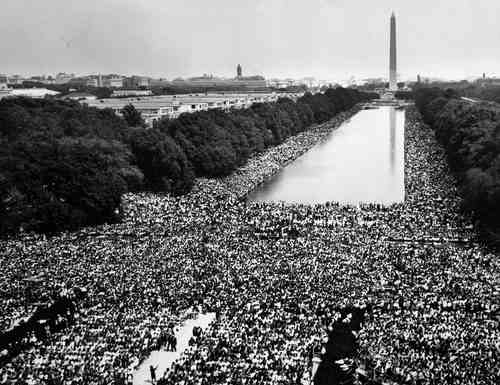
The American dream is rooted in hopes and dreams about life, liberty, and the pursuit of happiness. It involves strong ideas about our freedom to thrive and prosper in this country. It affirms that if we work hard we can live lives more bountiful than our ancestors did – and that we can do so free of civil strife, famine, political repression, systemic discrimination, or claims of title or aristocracy. It’s a dream of fairness, equality, and justice — justice rolling “like a mighty stream.”
Rallies in American streets this past month strongly affirm that this is the American dream – affirm it through outrage over its violation.
If the American dream is about riches only, something valuable really is slipping out of reach.
- dsugarman likes this
 isaacsmith likes this
 cfcasper likes this
 etr-gu posted this