
by Paul Eliefrom Georgetown University
A Hugely Enjoyable “Midnight” in Istanbul
The New Republic is dead, but there’s still a periodical that publishes ample, learned, thoughtful, and discerning reviews of current books.
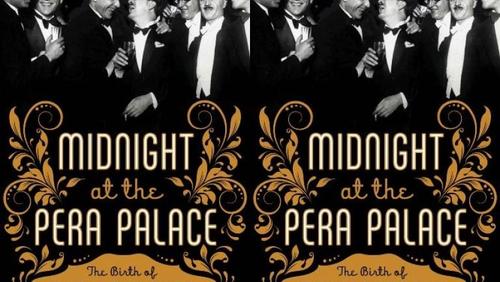
Maybe you’ve heard of it. It’s called The New York Times Book Review, and the other day it published an ample, learned, thoughtful, and discerning review of Georgetown professor Charles King's new book.
A total rave, I mean. And what’s more, a total rave by a novelist – Jason Goodwin – who really knows how to write, who knows how to make a book review a story of its own.
Our reviewer-storyteller begins by announcing his story:
Every now and then, there’s a story that needs to be told. It may come in a film or a novel, but it often arrives as a history. These days, we need a history of Ukraine and one of Syria, and we also need Charles King to trace the making of modern Istanbul.
He sets the scene:
King’s timely new book, “Midnight at the Pera Palace,” tells how interwar Istanbul transformed itself from the Ottoman imperial capital to a European city of refugees, jazz bars, muezzins and spies. Today’s city is a rare blend of Islam and democracy, and King has made a brilliant attempt to establish an English-language narrative for it.
In a few words, he takes you there:
We glide into the story on the wheels of the Orient Express, that fabled train whose arrival in Constantinople, as Istanbul was known until the 1930s, symbolized the city’s wakening connections to the West … Already we’re a long way from the stock harem-and-mosque image of Istanbul.
He finds a figure for the complexity of the story, and sets this complex story against the simple story shoehorned into news reports:
In King’s narrative, each event — each new arrival — lays down another layer, chisels another facet of the city’s history. These are the Istanbul stories the Erdogans of today would gladly leapfrog, stories that remind us exactly how modern Istanbul became itself.
He suggests that the story is so rich that it enfolds and unfolds other stories, superabundantly:
King’s broader perspective absorbs many facets of Istanbul’s interwar history, from its jazz age to its relationship with Russia. That Russian story could be a book in itself …
He touches on something totally original about the story:
King revels in what he calls a “sonic history” of the city, detailing changes to its soundscape: “Istanbul was, in a way it never had been before, loud.” It wasn’t just that there were new cars and fire engine sirens, there were the new sounds of the movies and popular musicians and phonograph recordings.
Finally, he lands on the summation, a single emphatic sentence about the story, a sentence whose music of superlatives is the sound of the holidays arriving early for author and publisher:
Charles King has combed out the threads of this complex and highly nuanced story in a hugely enjoyable, magnificently researched and deeply absorbing book.
Nice going, Charles.