
by Paul Eliefrom Georgetown University
Bergoglio’s “Core Four” Approach
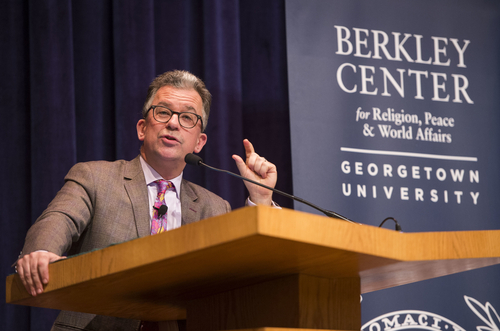
Austen Ivereigh spoke about his new biography of Pope Francis at Georgetown last night, and the event was (among other things) a persuasive argument for an Oxford education.
It was at Oxford (of all places) that Austen wrote a thesis on (of all things) the Catholic Church in Argentina – an experience that equipped him to write this biography; and it was at Oxford, presumably, that he polished the public-speaking skills that enabled him to tell the audience the “best bits” from the book from the stage in such a way that, hearing him, you knew you had to get the full account by reading the book.
He told the story of how the biography came to be the book it is. I don’t mean the story of how he met Pope Francis in Rome and the pope gave him a firm squeeze on the wrist that emboldened him to write the book. I mean the story of how, returning to Buenos Aires to conduct research for the book, he located the bound volumes containing Jorge Mario Bergoglio’s casual homilies and addresses to Jesuits in formation. These – eventually published, as far as I can tell, in Meditaciones para Religiosos and two other books – make it possible for us to know what Bergoglio thought as far back as the mid-1970s. And they mean that in this English-language biography the native-Spanish-speaking pope is alive and audible, speaking in something like his own voice.
The ideas and principles Bergoglio put to paper in the seventies and eighties are the substance of his approach. He has a “core four” principles of Jesuit-style discernment:
Unity comes before conflict.
The whole comes before the part.
Time comes before space.
Reality comes before the idea.
Austen calls these “a kind of sapiental wisdom,” and he is right. Clear, hard, succinct, axiomatic, they sound like something out of the Pensées of Pascal.
I led a conversation with Austen later in the evening, and video will be up soon on the Berkley Center website.